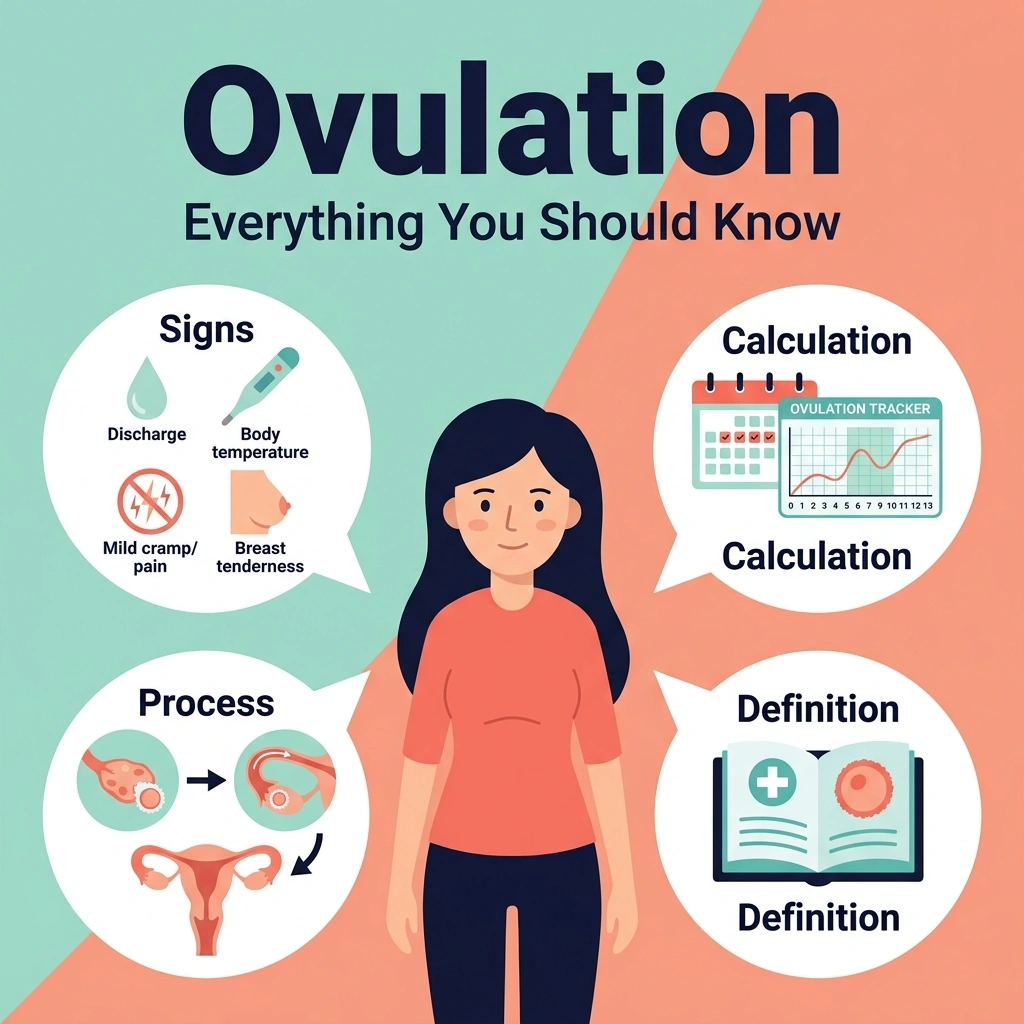
Ovulation refers to the monthly release of a mature egg from the ovary into the reproductive tract. The ovulatory process comprises 3 core stages: follicular, ovulatory, and luteal, all of which are covered in this article. Ovulation occurs around the midpoint of the menstrual cycle, typically between day 11 and day 21, depending on individual cycle length.
The main signs and symptoms of ovulation to watch for include changes in cervical mucus, a rise in basal body temperature, mild pelvic pain, breast tenderness, light spotting, increased libido, and bloating.
Tracking and calculating ovulation can be done through ovulation predictor kits, basal body temperature charting, cervical mucus monitoring, fertility apps, and clinical ultrasound. The most common ovulation disorders include anovulation, PCOS, hypothyroidism, premature ovarian insufficiency, and hyperprolactinemia. There are many treatment options available for this problem, especially in India. Finding the right treatment facility matters, and for individuals across India, connecting with a trusted fertility network makes identifying the most suitable and affordable care significantly easier.
What Is Ovulation?
Ovulation is the physiological process by which a dominant ovarian follicle ruptures and releases a mature egg into the fallopian tube, triggered by a sharp rise in luteinizing hormone. Ovulation occurs when the hypothalamus releases gonadotropin-releasing hormone (GnRH), which stimulates the pituitary gland to secrete follicle-stimulating hormone (FSH) and luteinizing hormone (LH). The ovaries, two almond-shaped glands located on either side of the uterus, contain hundreds of thousands of immature eggs stored within follicles. During each menstrual cycle, FSH promotes the growth and maturation of several follicles, but usually only one becomes the dominant follicle. A surge in LH then triggers the release of a mature egg from that follicle, a process known as ovulation.
According to Dr. Chekuri Suvarchala Vardhan, Scientific Director and Master’s in Clinical Embryology (Australia & UK), PhD (Genetics), “The factors are that the ovaries have a good number of oocytes (eggs) and the tubes are open. Remember, the tubes have to be open on both sides. The endometrium is good. How do we know that? We know that by regular periods. And the partner’s sperm are within normal parameters. So these four important things have to be kept in mind when you approach your doctor.”
Ovulation is essential for natural conception because fertilization requires a viable egg to be present. The mammalian ovum within the female body was first identified in 1827 by German physiologist Karl Ernst von Baer, a landmark discovery that profoundly advanced scientific understanding of reproduction and fertility. According to a study published in npj Digital Medicine that evaluated over 600,000 menstrual cycles, researchers found that for a standard 28-day cycle, the most common day of peak ovulation was actually Day 15 (occurring in 27% of cycles), closely followed by Day 16 (21%).
Where Does Ovulation Occur in the Female Body?
Ovulation occurs within the ovary of the female body when the dominant follicle grows to approximately 18 to 25 millimeters in diameter and ruptures in response to the luteinizing hormone (LH) surge, releasing the mature egg from the ovarian surface into the fallopian tube.
The dominant follicle is the primary site of the ovulation process in the body because it is the sole follicle that develops the greatest sensitivity to LH across each cycle, allowing it to respond to the hormonal peak while all other competing follicles undergo atresia. This selection mechanism is what restricts the stages of ovulation to a single egg release per cycle in most cases.
If ovulation does not proceed through its orderly, phase-by-phase sequence or fails to occur altogether, the resulting condition is known as anovulation. Anovulation can originate at any stage in the ovulation process in the body, from a failure of follicular maturation to an inadequate LH surge, and represents one of the most clinically significant causes of irregular menstrual cycles and ovulation-related infertility.
What Are the Stages of Ovulation?
The stages of ovulation include the follicular stage, the ovulatory stage, and the luteal stage — each governed by a distinct hormonal pattern that drives preparation, egg release, and the post-ovulatory environment in sequence.
The stages of ovulation are listed below.
- Follicular Stage: The follicular stage is the pre-ovulatory phase in which FSH stimulates a group of ovarian follicles to grow, ultimately driving estrogen production and uterine lining thickening. During this ovulation phase, rising estrogen concentrations trigger a positive feedback loop on the pituitary gland, leading to a rapid and dramatic increase in LH secretion (the LH surge) that initiates the transition to the next stage. The primary hormones active during this phase are FSH and estrogen, and the phase typically lasts from day 1 of menstruation through approximately day 13 in a standard 28-day cycle.
- Ovulatory Stage: The ovulatory stage is the brief 24-to-36-hour window during which the LH surge causes the dominant follicle to rupture and release the mature egg into the fallopian tube. This is the only phase in the entire ovulation phase cycle in which fertilization is biologically possible. The released egg is swept into the tube by finger-like projections called fimbriae, where it may be fertilized by a sperm cell. LH is the defining ovulation hormone during this stage, and its detection via urine tests is the basis of commercially available ovulation predictor kits.
- Luteal Stage: The luteal stage refers to the post-ovulatory phase in which the ruptured follicle transforms into the corpus luteum, a temporary endocrine structure that secretes progesterone to prepare the uterine lining for potential implantation. The luteal stage of ovulation is the most consistent in duration across individuals, lasting approximately 12 to 14 days regardless of total cycle length. If fertilization does not occur, the corpus luteum degenerates, progesterone levels fall, and menstruation begins, completing the cycle and resetting the hormonal environment.
What Hormones Control Ovulation?
Hormones that control ovulation include follicle-stimulating hormone (FSH), estrogen, luteinizing hormone (LH), and progesterone, which work together to mature follicles, release an egg, and prepare the uterus for pregnancy.
The ovulation-regulating hormones are listed below.
- Follicle-Stimulating Hormone (FSH): FSH is a pituitary hormone that stimulates the growth and maturation of ovarian follicles during the follicular phase of the menstrual cycle.
- Estrogen: Estrogen is a steroid hormone produced by developing follicles that thickens the uterine lining and triggers the LH surge as it peaks immediately before ovulation in the menstrual cycle.
- Luteinizing Hormone (LH): LH is the pituitary hormone that produces the ovulatory surge, directly causing the dominant follicle to rupture and release the mature egg during the menstrual cycle.
- Progesterone: Progesterone is secreted by the corpus luteum after ovulation to maintain the uterine lining and create the hormonal conditions necessary for embryo implantation in the menstrual cycle.
When Does Ovulation Occur During the Menstrual Cycle?
Ovulation occurs around day 14 of a 28-day cycle, but this estimate applies only to those with a textbook-length cycle and does not reflect the experience of the majority of people. Cycle length varies considerably; ovulation typically occurs between day 11 and day 21, depending on individual menstrual cycle length, overall hormone production, and lifestyle or health factors that influence the female reproductive system.
The ovulation timeline table is presented below.
| Cycle Phase | Days (Approximate) | Hormonal Activity | Ovulation Relevance |
|---|---|---|---|
| Menstruation | Days 1–5 | Estrogen and progesterone low | Cycle resets; the ovulation calculation starts from day 1 |
| Follicular Phase | Days 1–13 | FSH rises; estrogen increases | Follicle development; uterine lining thickens |
| Ovulation | Day 14 (±3–7 days) | LH surges; estrogen peaks | Egg is released; ovulation cycle day varies by individual |
| Luteal Phase | Days 15–28 | Progesterone dominates; estrogen declines | Uterine lining maintained; cycle length variation determines when menstruation returns |
How Many Days After Period Does Ovulation Occur?
Ovulation occurs about 14 days after the first day of your last period, which is a figure often used as the baseline for ovulation after period estimation. However, ovulation day calculation cannot be reduced to a single universal number because timing depends entirely on individual cycle length.
A person with a 24-day cycle may ovulate as early as day 10, while someone with a 32-day cycle may not ovulate until day 18 or later. Tracking methods that account for these individual differences produce far more reliable results than any fixed-day assumption.
Does Ovulation Always Occur on Day 14 of the Cycle?
No, ovulation does not always occur on day 14 because the day-14 figure applies only to a textbook 28-day cycle, which represents the average across a population, not the reality for most individuals. Studies consistently show that cycle lengths range from 21 to 35 days in healthy people of reproductive age, and ovulation timing shifts proportionally within that range.
Beyond cycle length, signs of ovulation can be disrupted or delayed by acute psychological stress, which suppresses GnRH and LH release, as well as illness, significant weight changes, travel, excessive exercise, and hormonal imbalances caused by conditions such as PCOS, hypothyroidism, or elevated prolactin, all of which can shift ovulation timing by several days or prevent it entirely in a given cycle.
What Are the Signs and Symptoms of Ovulation?
The signs and symptoms of ovulation include changes in cervical mucus, mild pelvic pain (mittelschmerz), a rise in basal body temperature, breast tenderness, increased libido, light spotting, and bloating.
The signs of ovulation are listed below.
- Changes in Cervical Mucus: Changes in cervical mucus refer to the shift from thick, opaque discharge to a clear, slippery, highly stretchy consistency resembling raw egg white, caused by the pre-ovulatory rise in estrogen. Rising estrogen signals the cervical glands to increase mucus volume and reduce viscosity, creating conditions that allow sperm to penetrate the cervical canal efficiently. This is the most reliable low-tech ovulation sign because fertile cervical mucus functions as an active transport medium for sperm; without this shift, even well-timed intercourse yields a significantly lower chance of fertilization.
- Mild Pelvic Pain (Mittelschmerz): Mittelschmerz refers to unilateral aching or sharp pain in the lower abdomen occurring mid-cycle when the dominant follicle ruptures, sometimes accompanied by light spotting or ovulation discharge. The biological event is the release of follicular fluid and a small volume of blood into the pelvic cavity, which irritates the peritoneum and produces the localized discomfort. The pain is felt on one side specifically because ovulation alternates between the ovaries each cycle, making the ovulation symptom a direct indicator of which ovary is active.
- Increased Basal Body Temperature (BBT): BBT rise refers to a sustained increase of 0.2 to 0.5 degrees Celsius in resting body temperature following ovulation, caused by the thermogenic effect of progesterone secreted by the corpus luteum. The biological event driving this shift is the transition from estrogen dominance to progesterone dominance that occurs immediately after egg release. Because the temperature increase is only detectable after ovulation has already occurred, BBT tracking is confirmatory rather than predictive, most useful for mapping cycle patterns across multiple months.
- Breast Tenderness: Breast tenderness refers to increased sensitivity, fullness, or mild soreness in the breast tissue around ovulation, triggered by peaking estrogen and early progesterone simultaneously stimulating ductal and glandular tissue. The biological event is the mid-cycle hormonal surge; estrogen drives ductal expansion while early progesterone stimulates alveolar tissue, both raising nerve sensitivity in the breast. This ovulation sign is difficult to distinguish from premenstrual breast changes because the same hormones remain elevated throughout the luteal phase.
- Increased Libido: Increased libido refers to the natural elevation in sexual desire experienced around ovulation, driven by the LH surge and peak estrogen concentration in the days immediately before egg release. The biological event is the combined influence of estrogen and rising mid-cycle testosterone, both from the adrenal glands and from the ovaries, on sexual motivation pathways in the brain. From a physiological standpoint, this ovulation sign is an evolutionarily conserved mechanism timed to maximize the probability of conception within the fertile window.
- Light Spotting: Light spotting refers to minimal pink or brown vaginal discharge appearing at ovulation when the sharp drop in estrogen following the LH surge causes a brief, transient endometrial shed before progesterone rises. This ovulation symptom is sometimes called estrogen-withdrawal spotting and is the direct result of the follicle rupturing and estrogen levels falling momentarily before the corpus luteum begins producing progesterone. The physiological distinction from menstrual bleeding is volume and duration: ovulation spotting involves trace amounts of blood lasting no more than one to two days.
- Bloating: Bloating refers to the sensation of abdominal fullness or mild distension experienced around ovulation, caused by the LH surge and early progesterone slowing gastrointestinal motility while estrogen promotes fluid and salt retention. The biological event is the mid-cycle shift in hormonal balance, in which estrogen and progesterone together increase water retention across the reproductive system and surrounding tissues. This ovulation sign resolves naturally within one to two days as the hormonal peak subsides and fluid retention normalizes.
Is It Possible to Ovulate Without Symptoms?
Yes, it is possible to ovulate without symptoms, and this is considerably more common than most people realize. The body can release an egg through a process of silent ovulation, where the egg is expelled from the follicle without producing any of the noticeable physical signs such as cramping, bloating, breast tenderness, or mid-cycle pain that are often used as indicators.
Silent ovulation does not mean anything is wrong with the reproductive process itself, because the hormonal sequence proceeds normally, and the egg is released on schedule. Symptoms vary significantly from person to person based on individual hormone sensitivity, body composition, and overall hormonal health.
Some individuals consistently notice clear physical changes across every cycle, while others experience none whatsoever, and the absence of ovulation symptoms does not indicate poor fertility or a reproductive problem.
What Is Mittelschmerz or Ovulation Pain?
Mittelschmerz, also known as ovulation pain, is a benign mid-cycle discomfort ranging from a dull, aching sensation to a sharper, more localized pain in the lower abdomen, occurring when the dominant follicle ruptures during ovulation. The medical basis for mittelschmerz symptoms is the release of follicular fluid and a small volume of blood into the peritoneal cavity when the follicle bursts; this fluid irritates the lining of the pelvis and produces the characteristic ovulation cramps and unilateral localization.
The reason ovulation pain typically occurs on one side is that each cycle, only one ovary releases an egg, meaning the pain traces directly to whichever side is ovulating. Mittelschmerz symptoms generally resolve within minutes to 48 hours and do not require medical treatment. However, when signs of ovulation pain are severe, persistent beyond two days, or accompanied by fever, heavy bleeding, or a foul-smelling discharge, medical evaluation is essential, as this pattern may indicate endometriosis, ovarian cysts, or another underlying reproductive condition requiring clinical management.
What Changes in Cervical Mucus Indicate Ovulation?
Cervical mucus changes indicate ovulation when it becomes clear, highly stretchy, slippery, and takes on the consistency of raw egg white, which is a transition widely referred to as egg-white ovulation discharge and considered the most fertile cervical mucus type observable. The biological basis for this change is the rise in estrogen in the five to six days before ovulation, which causes the cervical glands to increase both the volume and the water content of cervical secretions while shifting the mucus from an acidic to an alkaline pH.
Fertile cervical mucus during this pre-ovulatory window has a spinnbarkeit (stretchability) of 4 to 8 centimeters, which allows sperm to travel efficiently through the cervical canal and survive for up to five days within the female reproductive tract. After ovulation, the rise in progesterone causes cervical mucus to revert to thick, sticky, and opaque in texture, forming a cervical barrier that prevents further sperm entry and signals the end of the fertile phase for that cycle.
How Long Does an Egg Live After Ovulation?
An egg lives for approximately 12 to 24 hours after ovulation, making its viability window far shorter than that of sperm within the female reproductive tract. The egg remains viable for fertilization for only 12 to 24 hours after being released from the ovary, a narrow timeframe that explains why accurate ovulation tracking is one of the most important practical steps for anyone attempting to conceive.
During this fertile window, the egg travels from the ovary through the fallopian tube, where fertilization by a sperm cell may occur. If fertilization does not take place within this window, the egg breaks down and is naturally reabsorbed by the body without medical consequence; the uterine lining eventually sheds during menstruation, and the cycle begins again.
What Is the Fertile Window?
The fertile window refers to the span of days within the menstrual cycle during which sexual intercourse can result in fertilization and conception. After ovulation, an egg remains viable for fertilization for approximately 12 to 24 hours, while sperm can survive in the female reproductive tract for up to 5 days.
As a result, the fertile window spans about 6 days, which are the 5 days before ovulation and the day of ovulation itself. The highest probability of conception occurs during the 2 to 3 days leading up to ovulation, when sperm are already present in the fallopian tube at the time the egg is released. Because this window is relatively short, accurately identifying ovulation can help individuals who are trying to conceive or avoid pregnancy.
How to Track Ovulation?
Tracking ovulation includes methods such as ovulation predictor kits, basal body temperature charting, cervical mucus monitoring, fertility tracking apps, and clinical ultrasound monitoring.
To track ovulation, follow the methods listed below.
- Ovulation Predictor Kits (OPKs): OPKs are urine-based tests for calculating ovulation that detect the LH surge in urine approximately 24 to 36 hours before egg release, providing a reliable, at-home method for identifying the most fertile days of the cycle with high predictive accuracy.
- Basal Body Temperature Tracking: BBT tracking involves recording resting body temperature each morning before getting out of bed, with a sustained rise of 0.2 to 0.5°C confirming that ovulation has already occurred, allowing cycle patterns to be mapped retrospectively across multiple months.
- Cervical Mucus Monitoring: Cervical mucus monitoring is the daily observation and charting of vaginal discharge to identify the transition to clear, stretchy, egg-white mucus that signals peak fertility and imminent ovulation, requiring no equipment and no cost beyond consistent daily attention.
- Fertility Tracking Apps: Fertility tracking apps are digital tools that use input cycle data, including period dates, BBT readings, and OPK results, to calculate estimated ovulation dates and identify the fertile window, improving in accuracy with each cycle of consistent data entry.
- Ultrasound Monitoring: Ultrasound monitoring, or follicular tracking, is a clinical method in which a healthcare provider uses transvaginal ultrasound to visualize follicle development in real time and confirm the exact moment of ovulation, making it the most precise and objective ovulation tracking method available.
How Does an Ovulation Calculator Work?
An ovulation calculator is a tool that estimates when ovulation is likely to occur during a menstrual cycle using the first day of the last menstrual period and the individual’s average cycle length. Most calculators estimate ovulation by counting backward from the expected start of the next period and often assume a luteal phase of about 14 days. Based on this calculation, they identify a likely ovulation date and the surrounding fertile window.
People use ovulation calculators to help time intercourse for conception, better understand their menstrual cycles, and identify general patterns in cycle timing. However, these calculations provide estimates rather than exact predictions, and their accuracy depends largely on cycle regularity. For individuals with irregular cycles or factors such as stress, illness, or hormonal conditions that may affect ovulation, additional methods such as basal body temperature (BBT) tracking, cervical mucus monitoring, and ovulation predictor kits can provide more reliable information about when ovulation is occurring.
What Factors Affect the Ovulation Process?
Factors that affect the ovulation process include age, hormonal imbalance, stress, body weight, PCOS, and thyroid disorders, all of which can disrupt the hormonal signals required for regular egg release.
The factors that affect the ovulation process are listed below.
- Age: Age progressively diminishes ovarian reserve and egg quality from the early thirties onward, with FSH rising compensatorily as the pituitary responds to reduced ovarian sensitivity, resulting in fewer predictable ovulation cycles and a higher risk of ovulation disorders with each passing year.
- Hormonal Imbalance: Hormonal imbalance disrupts ovulation by interfering with the FSH, LH, estrogen, and progesterone sequence required for follicular development, dominant follicle selection, and the LH surge, any disruption to which can prevent egg release entirely within a given cycle.
- Stress: Stress suppresses ovulation by activating the hypothalamic-pituitary-adrenal axis, which elevates cortisol and inhibits GnRH secretion, effectively reducing FSH and LH output and delaying or preventing ovulation in affected cycles.
- Body Weight: Body weight influences ovulation at both extremes: excess adipose tissue aromatizes androgens into estrogen, disrupting the pituitary feedback loop, while very low body fat reduces estrogen below the threshold required to initiate FSH-driven follicular development.
- PCOS (Polycystic Ovary Syndrome): PCOS disrupts ovulation by causing elevated androgens and an imbalanced LH-to-FSH ratio that prevents follicles from reaching full maturity, leading to absent or irregular ovulation and making it one of the most prevalent ovulation disorders globally.
- Thyroid Disorders: Thyroid disorders affect ovulation by altering thyroid hormone levels that regulate pituitary FSH and LH secretion, making both hypothyroidism and hyperthyroidism common contributors to irregular cycles and ovulation-related disorders.
What Are the Common Ovulation Disorders?
Common ovulation disorders include anovulation, PCOS, hypothyroidism, premature ovarian insufficiency (POI), and hyperprolactinemia, all of which disrupt hormone signals and impair regular egg release.
The common ovulation disorders are listed below.
- Anovulation: Anovulation is the complete failure of the ovaries to release an egg during a menstrual cycle, representing the most direct and common cause of ovulatory infertility.
- PCOS (Polycystic Ovary Syndrome): PCOS is a hormonal disorder marked by elevated androgens, LH-to-FSH imbalance, and multiple small immature follicles that prevent regular ovulation in affected individuals.
- Hypothyroidism: Hypothyroidism is an underactive thyroid condition that reduces the pituitary gland’s ability to produce adequate FSH and LH, causing disrupted or absent ovulation cycles.
- Premature Ovarian Insufficiency (POI): Premature Ovarian Insufficiency is the early loss of normal ovarian function before age 40, characterized by reduced follicular response, elevated FSH, and irregular or absent ovulation.
- Hyperprolactinemia: Hyperprolactinemia is a condition of abnormally high prolactin levels that suppresses GnRH and LH output from the pituitary, directly preventing the hormonal cascade needed to trigger ovulation.
Early medical support is essential, as timely diagnosis and treatment of ovulation disorders can help restore hormonal balance, improve fertility outcomes, and prevent long‑term reproductive complications.
When to Seek Medical Help for Irregular Ovulation?
Seek medical help for irregular ovulation when cycles are consistently shorter than 21 days, longer than 35 days, or absent for 3 or more consecutive months without a clear temporary explanation such as recent illness, travel-related disruption, or sudden weight change. Standard clinical guidance supports a fertility evaluation after 12 months of regular, unprotected intercourse without conception for those under 35, and after just 6 months for those over 35, given the accelerating pace of age-related fertility decline in that age group.
Immediate consultation with a fertility specialist is recommended when irregular periods are accompanied by a prior diagnosis of PCOS, thyroid disorders, or hyperprolactinemia; a reproductive history involving endometriosis, pelvic inflammatory disease, or sexually transmitted infections; or any experience of absent periods for more than three months without a confirmed pregnancy. Beginning treatments at the earliest appropriate stage significantly improves the likelihood of restoring ovulation and achieving conception before additional complications develop.
What Are the Best Ovulation Disorder Treatments in India?
The best ovulation disorder treatments in India include oral ovulation induction, injectable gonadotropin therapy, surgical intervention, targeted hormone management, and IVF with controlled ovarian hyperstimulation.
The best ovulation disorder treatments in India are listed below.
- Oral Ovulation Induction (Clomiphene Citrate or Letrozole): Oral ovulation induction medications stimulate follicular development by modifying estrogen feedback to the pituitary gland. This treatment method represents the most common and affordable first-line treatment for anovulation and PCOS-related ovulation disorders at the best fertility clinics in India.
- Injectable Gonadotropins (FSH or hMG): Injectable gonadotropins deliver FSH and LH directly into the bloodstream to stimulate multiple follicles simultaneously, used when oral medications fail to induce ovulation. This treatment is offered across different cost ranges depending on the dosage protocol, cycle length, and the clinic’s location.
- Laparoscopic Ovarian Drilling: Ovarian drilling is a minimally invasive surgical procedure used for PCOS patients who are resistant to oral ovulation induction, involving the creation of small perforations in the ovarian surface to reduce androgen production and restore spontaneous, regular ovulation cycles.
- Thyroid and Prolactin Hormone Management: For ovulation disorders caused by hypothyroidism or hyperprolactinemia, targeted pharmacological management, levothyroxine for an underactive thyroid, or dopamine agonists such as cabergoline for elevated prolactin. This treatment can restore the hormonal foundation required for regular ovulation without invasive intervention at the best fertility clinics in India.
- IVF with Controlled Ovarian Hyperstimulation: IVF with controlled ovarian hyperstimulation is the highest-tier treatment option, used when simpler methods have failed or when multiple fertility factors are present simultaneously. This high-tier treatment is available at specialized facilities across India in different cost ranges that remain substantially lower than comparable IVF costs in Western markets.
How Much Does Ovulation Disorder Treatment Cost in India?
The cost of treating ovulation disorders in India ranges from ₹5,000 to over ₹1,00,000 depending on diagnosis, monitoring needs, medication type, duration, and whether it is part of assisted reproduction treatment. Costs vary because the type of treatment, medications, monitoring frequency, specialist fees, and diagnostic testing are all variable.
A straightforward ovulation induction cycle requires far fewer resources than a monitored IVF protocol with genetic testing. Oral ovulation-induction medications such as clomiphene citrate or letrozole represent the most affordable treatment tier, with medication costs as low as ₹200 to ₹500 per cycle and monitoring ultrasounds adding ₹1,000 to ₹3,000 per session. At the other end of the spectrum, IVF with controlled ovarian hyperstimulation involves injectable medications, clinical monitoring, egg retrieval, laboratory procedures, and embryo transfer, bringing quality treatment cycle costs to between ₹80,000 and ₹2,00,000 or more at established infertility clinics.
Can Ovulation Disorders Lead to Infertility?
Yes, ovulation disorders can lead to infertility by preventing the release of a viable egg, which is the biological prerequisite for natural conception. Without a functional ovulation cycle, there is no egg available for fertilization regardless of sperm quality or timing of intercourse. According to clinical data from the American Society for Reproductive Medicine, ovulatory dysfunction is responsible for approximately 25% to 30% of all female infertility diagnoses, making it the most common identifiable cause of fertility impairment in women of reproductive age.
Early treatment for infertility is critical because fertility naturally declines with age, and untreated ovulation disorders such as PCOS, hypothyroidism, and hyperprolactinemia tend to worsen over time, causing secondary hormonal changes, endometrial disruption, and reduced ovarian reserve that increase the complexity and cost of treatment the longer intervention is delayed.
How to Find Quality and Affordable Treatments in India for Infertility?
To find quality and affordable treatments in India for infertility, the most important first step is connecting with a verified fertility specialist who can confirm the underlying ovulation disorder through targeted diagnostic testing before recommending a treatment pathway. Treatment matters most when it is initiated before age-related fertility decline accelerates, particularly for those over 30 with irregular ovulation or a known reproductive condition.
When evaluating fertility clinics and providers, check for ICMR accreditation, documented success rates for the specific condition being treated, transparency around medication costs and monitoring fees, and clear protocols for tracking ovulation properly throughout each treatment cycle. Understanding the different ovulation stages and being able to identify your own signs of ovulation before the first consultation also helps specialists make faster, more accurate diagnostic decisions.
Here at Fertility Network, we help patients across India locate accredited, affordable fertility treatment centers matched to their specific diagnosis, whether that means oral ovulation induction, injectable gonadotropin protocols, surgical intervention, or full IVF cycles. Our network connects individuals with experienced specialists who communicate clearly, monitor progress using evidence-based tracking tools, and focus on long-term outcomes. Visit Fertility Network to find the right care near you.

Fathima Zahra is a reproductive health content specialist at FertilityNetwork.in — India’s largest independent fertility clinic directory and patient education platform.
Fathima’s work covers the full spectrum of reproductive medicine, from foundational biology to advanced fertility treatment. Her published articles span reproductive anatomy (ovaries, uterus, fallopian tubes, testes), core reproductive processes (ovulation, fertilization, implantation, the menstrual cycle), reproductive hormones (estrogen, progesterone, testosterone, FSH, LH, AMH, and prolactin), and the clinical conditions that cause infertility in both men and women.
On the male side, her research covers conditions including azoospermia, oligospermia, asthenozoospermia, teratozoospermia, varicocele, erectile dysfunction, Klinefelter syndrome, and Y chromosome microdeletion. On the female side, she writes about PCOS, endometriosis, uterine fibroids, anovulation, diminished ovarian reserve, premature ovarian insufficiency, tubal blockage, pelvic inflammatory disease, and Turner syndrome.
Her treatment coverage includes intrauterine insemination (IUI), in vitro fertilization (IVF), intracytoplasmic sperm injection (ICSI), egg retrieval, embryo transfer, egg freezing, sperm freezing, and oncofertility — providing patients with detailed, process-level understanding of each procedure, its clinical indications, success rates, and costs.
Every article Fathima publishes follows a structured, evidence-based research methodology:
1. Source verification against ICMR (Indian Council of Medical Research) national fertility and ART guidelines
2. Cross-referencing with ESHRE (European Society of Human Reproduction and Embryology) clinical protocols
3. Alignment with ASRM (American Society for Reproductive Medicine) evidence-based practice guidelines
4. Citation of PubMed-indexed, peer-reviewed studies published within the last 5 years
5. Verification of all diagnostic thresholds, hormonal reference ranges, and clinical statistics against current international standards
All content authored by Fathima undergoes editorial review by the FertilityNetwork Medical Research Board before publication, ensuring clinical accuracy and factual integrity across every article published on the platform.
Fathima’s content is editorially independent. FertilityNetwork.in does not publish sponsored medical opinions, and no article is written to promote specific clinics, doctors, or fertility treatments.
Leave a Reply