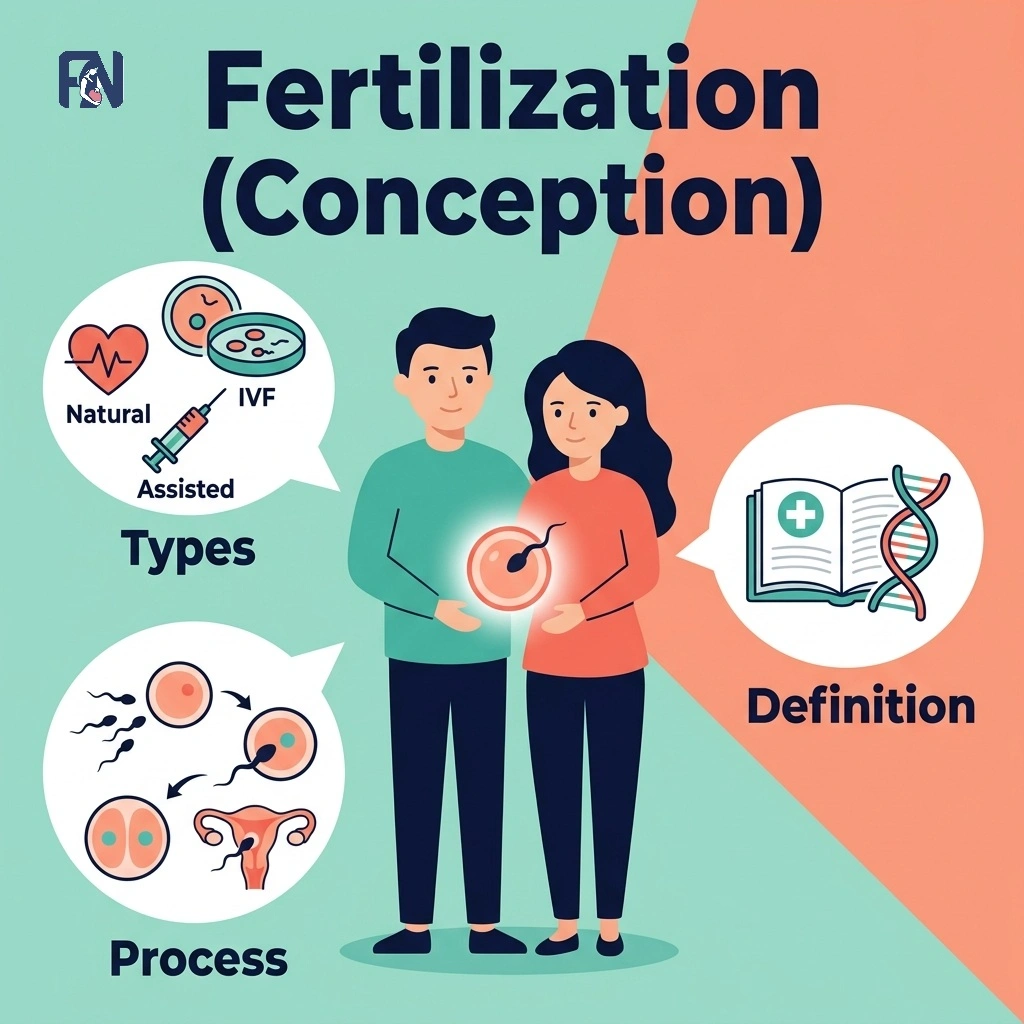
Fertilization refers to the biological union of a sperm and an egg that triggers the beginning of pregnancy. Fertilization and conception are the same biological event and are used interchangeably in both medical and everyday contexts. There are 2 main types of fertilization (internal and external) along with the 6-step biological process by which fertilization occurs, from ovulation through zygote formation. The complete fertilization timeline spans approximately 6 to 10 days, from the release of the egg to confirmed implantation in the uterine wall.
The main signs of conception include implantation bleeding, breast tenderness, mild cramping, nausea, and rising hCG levels detectable by a pregnancy test. When fertilization fails, treatment options such as hormonal therapy, assisted reproductive technology (ART), surgical intervention, and lifestyle modification are available and effective. Choosing the right fertility clinic in India is a critical step in pursuing these treatments, as success rates, specialist expertise, and diagnostic capabilities vary significantly across centers. Fertility Network helps couples across India identify trusted, affordable fertility treatment options near them.
What Is Fertilization?
Fertilization, also known as conception, is the biological process in which a single sperm cell penetrates and fuses with a mature egg cell, combining their genetic material to produce a genetically unique single cell called a zygote. According to the World Health Organization (WHO), roughly 1 in 6 people, approximately 17.5% of the adult population worldwide, experience infertility and need fertility support or medical treatments at some point in their lives, while a healthy couple under the age of 30 has a 20% to 25% chance of experiencing normal fertilization resulting in a clinical pregnancy each month.
According to Dr. Syed Muhammad Najeeb, globally renowned medical educator, “Fertilization is a coordinated sequence of molecular and cellular processes. It begins with the contact of the oocyte and sperm and ends with the intermingling of maternal and paternal chromosomes. The process concludes with the intermingling of maternal and paternal chromosomes at the metaphase of the first mitotic division of the zygote.”
Fertilization occurs in the ampullary region of the fallopian tube, typically within 12 to 24 hours of ovulation. Once the sperm and egg fuse, the resulting zygote carries 46 chromosomes, 23 from each parent, and begins an immediate sequence of cell divisions as it travels toward the uterus. The biological process of human fertilization was first described in clinical detail in the late 19th century, with foundational contributions from Robert Edwards and Patrick Steptoe in the 1970s, whose work on in vitro fertilization established the modern framework for understanding the different types of fertilization, sperm, and egg interaction.
What Are the Types of Fertilization?
The 2 main types of fertilization are listed below.
- Internal Fertilization: Internal fertilization refers to the fusion of sperm and egg that occurs inside the body of the female organism, specifically within the reproductive tract. In humans, sperm deposited during intercourse travel through the cervix and uterus into the fallopian tube, where it encounters and fertilize the egg in the ampullary region. This process is characteristic of all mammals, birds, and reptiles, and represents the natural conception pathway in the human body.
- External Fertilization: External fertilization refers to the union of sperm and egg that takes place outside the organism’s body, most commonly in an aquatic environment where both gametes are simultaneously released. This type is observed in most fish and amphibians, where large quantities of eggs and sperm are shed into water for fertilization. In clinical reproductive medicine, procedures such as in vitro fertilization (IVF), where eggs are fertilized in a laboratory dish, represent a medically supervised form of external fertilization.
Where Does Fertilization Occur in the Human Body?
Fertilization occurs in the fallopian tube, specifically in the ampullary region, the widest, most proximal segment of the tube located closest to the ovary. The ampulla serves as the primary site of the proper process of conception because it provides the ideal microenvironment for sperm capacitation completion and egg viability, with its expanded lumen allowing successful sperm-egg contact.
The anatomical reason the ampulla is favored over other regions is that it is the first segment of the tube the egg enters after ovulation, maximizing the likelihood of sperm-egg encounter. If fertilization occurs outside the fallopian tube, for example, within the interstitial segment of the tube, on the ovarian surface, or in the abdominal cavity, it results in an ectopic pregnancy, a potentially life-threatening condition in which the embryo cannot develop normally. Ectopic pregnancy must be treated promptly with medication or surgery to prevent rupture and severe internal hemorrhage.
What Is the Step-by-Step Process of Fertilization?
The process of fertilization involves a 6-step biological sequence that begins with the release of a mature egg at ovulation and concludes with the embedding of the blastocyst into the uterine wall during implantation.
The 6 steps of the fertilization process are listed below.
- Step 1 — Ovulation and Egg Release: Ovulation refers to the luteinizing hormone (LH) surge-triggered release of a mature oocyte from the dominant ovarian follicle into the peritoneal cavity, marking the start of the conception timeline. The egg is swept into the fallopian tube by the fimbriae, finger-like projections at the tube’s distal end, and remains viable for only 12 to 24 hours. For fertilization to occur, sperm must be present in the tube within this narrow window.
- Step 2 — Sperm Journey and Capacitation: Sperm capacitation is the series of biochemical and physiological changes that sperm undergo inside the female reproductive tract, enabling them to penetrate and fertilize the egg. Of the millions of sperm deposited during intercourse, only a few hundred survive the journey through the cervix and uterus to reach the fallopian tube. Capacitation, which typically takes 4 to 6 hours, enhances sperm motility and prepares sperm to undergo the acrosome reaction essential for egg penetration.
- Step 3 — Sperm-Egg Contact and Penetration: Sperm-egg contact refers to the binding of a capacitated sperm to the zona pellucida, the glycoprotein coat surrounding the egg, which triggers the acrosome reaction, releasing hydrolytic enzymes that dissolve the outer coating and allow sperm to penetrate. Once the single winning sperm fuses with the egg’s plasma membrane, the cortical reaction immediately modifies the zona pellucida to create the polyspermy block, preventing any additional sperm from entering. This mechanism ensures that only one set of paternal chromosomes contributes to the new embryo.
- Step 4 — Genetic Fusion and Zygote Formation: Zygote formation is the completed fusion of the sperm nucleus (23 chromosomes) and the egg nucleus (23 chromosomes) to produce a diploid cell with 46 chromosomes, the full genetic blueprint of a unique new human organism. This step, called syngamy, marks the true biological completion of fertilization and determines the inherited traits, sex, and chromosomal identity of the resulting individual. The zygote immediately enters the earliest stage of embryonic development.
- Step 5 — Cell Division and Blastocyst Formation: Cell division refers to the sequential mitotic cleavage divisions (collectively called cleavage) through which the zygote multiplies from one cell into a multicellular embryo during its 3 to 4 day journey through the fallopian tube. By days 3 to 4, the embryo compacts into a 16-cell solid cluster called a morula; by days 5 to 6, a fluid-filled cavity forms inside, transforming the morula into a blastocyst. The blastocyst contains two distinct populations: the inner cell mass, which develops into the embryo proper, and the outer trophoblast, which forms the placenta.
- Step 6 — Implantation in the Uterus: Implantation refers to the process by which the blastocyst adheres to and embeds itself into the endometrium, the receptive inner lining of the uterus, approximately 6 to 10 days after fertilization. Successful implantation depends on synchronized blastocyst development and endometrial receptivity during the implantation window, a narrow 3 to 4 day period in the mid-luteal phase. Once implanted, the trophoblast begins secreting human chorionic gonadotropin (hCG), which confirms the biological start of pregnancy and is the hormone detected by pregnancy tests.
How Long Does Fertilization Take?
Fertilization occurs within 12 to 24 hours after ovulation due to the limited viability window of the mature oocyte and the requirement for sperm-egg contact before the egg deteriorates. The sperm viability window extends 3 to 5 days in the female reproductive tract, creating a fertilization window of up to 6 days per cycle, the 5 days before ovulation and the day of ovulation itself.
The full fertilization timeline from sperm-egg union to confirmed implantation spans approximately 6 to 10 days, during which the embryo undergoes continuous division and travels from the fallopian tube to the uterus.
The fertilization timeline table is presented below.
| Event | Approximate Timing | Explanation |
|---|---|---|
| Ovulation | Day 0 | A mature oocyte is released from the dominant ovarian follicle into the fallopian tube, where it remains viable for 12 to 24 hours. |
| Fertilization | Within 12–24 hours | A capacitated sperm penetrates the zona pellucida and fuses with the egg in the fallopian tube ampulla, forming a zygote with 46 chromosomes. |
| Cell Division (Cleavage) | Days 1–3 | The zygote undergoes rapid mitotic divisions, forming a 2-cell, 4-cell, and 8-cell embryo as it travels through the fallopian tube. |
| Morula Formation | Days 3–4 | The embryo compacts into a 16-cell solid mass called a morula as it continues its journey toward the uterine cavity. |
| Blastocyst Formation | Days 5–6 | A fluid-filled cavity forms within the morula, producing the blastocyst, which contains the inner cell mass and the outer trophoblast layer. |
| Implantation | Days 6–10 | The blastocyst adheres to and embeds into the endometrium; hCG secretion begins, confirming the start of early pregnancy. |
Can Sperm Fertilize an Egg within 24 Hours?
Yes, sperm can fertilize an egg within 24 hours once capacitation completes and the egg enters the fallopian tube, triggering zona pellucida binding and the acrosome reaction for fertilization. In practice, fertilization can occur within minutes to hours after a capacitated sperm makes contact with a viable egg.
The egg itself is only viable for 12 to 24 hours after ovulation, making this the most critical period of the fertilization window for successful conception. Paying close attention to signs of fertilization, including mild pelvic pressure, breast sensitivity, and light spotting, can help individuals identify when conception may have occurred.
What Are the Signs of Fertilization or Conception?
The signs of fertilization include a range of early physiological, physical, and hormonal changes that begin in the days following the union of sperm and egg.
The signs of fertilization are listed below.
- Early Signs: Early signs refer to the subtle physiological changes, including fatigue, heightened sense of smell, mild nausea, and pelvic pressure — that may appear within 6 to 12 days of fertilization, often before a missed period.
These changes are caused by the initial hormonal shifts triggered by implantation, particularly rising progesterone levels, and can be easily mistaken for premenstrual symptoms. A home pregnancy test remains the most reliable confirmation, as elevated hCG levels become detectable approximately 10 to 14 days after ovulation.
- Physical Signs: Physical signs refer to body-level changes such as light implantation bleeding, mild pelvic cramping, bloating, increased urination, and breast tenderness that some individuals experience in the days following successful fertilization.
Implantation bleeding, light spotting lasting 1 to 3 days, is caused by the mechanical embedding of the blastocyst into the uterine wall. The unique physiological reason behind breast tenderness at this stage is the rapid rise in progesterone, which stimulates mammary gland tissue and increases blood flow to the breasts in preparation for potential pregnancy.
- Hormonal Signs: Hormonal signs refer to the measurable biochemical changes that occur after successful implantation, most notably a sharp rise in human chorionic gonadotropin (hCG), progesterone, and estrogen in the bloodstream.
Elevated hCG is directly responsible for common early pregnancy symptoms including nausea, fatigue, frequent urination, and mood changes that many individuals experience in the first weeks of conception. Hormonal signs represent the most reliable early indicators of successful fertilization, with rising hCG levels typically detectable via a home pregnancy test between 10 and 14 days post-ovulation.
What Is the Difference Between Fertilization and Implantation?
The difference between fertilization and implantation is that fertilization is the union of sperm and egg in the fallopian tube that forms a zygote, while implantation is the embedding of the resulting blastocyst into the uterine wall 6 to 10 days later. Fertilization produces the initial genetic union that begins embryonic development, whereas implantation establishes the physical connection between the embryo and the mother’s body that enables nutrient exchange, hormonal signaling, and sustained pregnancy.
Understanding the sense of fertilization, that it marks the beginning of a biological sequence, not the instant confirmation of pregnancy and distinguishing it from implantation helps individuals correctly interpret early signs such as spotting, cramping, and missed periods in the context of their cycle.
Is it Possible to Feel Fertilization Happening?
No, it is not possible to feel fertilization happening because it is a microscopic cellular process that occurs inside the fallopian tube and produces no physical sensations whatsoever. Fertilization involves the fusion of individual cells at a scale entirely below the threshold of human perception, and no nerve endings or pressure receptors in the body can detect it.
What may be felt in the days that follow is not fertilization itself but implantation, the embedding of the embryo into the uterine wall, which can sometimes cause mild cramping or light spotting known as implantation symptoms after fertilization. A pregnancy test is the appropriate confirmation tool, as rising hCG levels become detectable 10 to 14 days after ovulation, and an ultrasound can confirm an intrauterine gestational sac at approximately 5 to 6 weeks of pregnancy.
What Happens After Fertilization?
After fertilization, the zygote begins a rapid and precisely orchestrated sequence of biological events that transforms a single diploid cell into a viable embryo capable of implanting in the uterine wall. The zygote undergoes cleavage to form a morula, a compact 16-cell mass, which then develops into a fluid-filled blastocyst by days 5 to 6 and travels through the fallopian tube toward the uterus for implantation within 6 to 10 days.
During early embryogenesis, the blastocyst undergoes significant cell differentiation: the inner cell mass develops into the embryo proper, while the outer trophoblast layer forms the placenta and begins hCG secretion. These events affect fertilization and the broader arc of early pregnancy in critical ways, any disruption in hormonal balance, genetic integrity, or uterine receptivity during this window can prevent successful implantation.
What Factors Affect the Fertilization Process?
Factors affecting fertilization include egg quality, sperm health, ovulation timing, age, hormonal balance, reproductive disorders, embryo implantation obstacles, and emotional factors that influence conception and pregnancy success.
Fact that affects fertilization are listed below.
- Egg Quality: Egg quality refers to the chromosomal and mitochondrial integrity of the oocyte, which directly determines whether the fertilized embryo will develop normally and implant successfully.
- Sperm Health: Sperm health refers to the motility, morphology, and total count of sperm cells, all of which influence both the likelihood of fertilization and the genetic viability of the resulting embryo.
- Ovulation Timing: Ovulation timing refers to the precise moment within the menstrual cycle when the egg is released, which must align with the presence of viable, capacitated sperm to improve fertilization chance.
- Age: Age refers to the biological impact of advancing years on oocyte quality and sperm DNA fragmentation, with fertility declining more sharply in women after 35 and in men after 45.
- Hormonal Balance: Hormonal balance refers to the appropriate cyclical levels of FSH, LH, estrogen, and progesterone required to regulate ovulation, support fertilization, and prepare the endometrium for implantation.
- Reproductive Disorders: Reproductive disorders refer to conditions, including PCOS, endometriosis, uterine fibroids, fallopian tube obstruction, and varicocele in men, that disrupt the anatomical or hormonal environment required for successful fertilization and improve fertilization chance when treated.
How to Increase the Chances of Conception?
To increase the chances of fertilization, follow the tips listed below.
- Ovulation Tracking: Ovulation tracking involves using basal body temperature charts, ovulation predictor kits, or fertility apps to precisely identify the fertile window and time conception attempts for maximum effectiveness.
- Optimize the Fertility Window: Understanding the fertility window, the 5 days before and the day of ovulation, allows individuals to time intercourse or insemination at peak probability for conception.
- Follow a Fertility-Supportive Diet: A diet rich in folate, omega-3 fatty acids, zinc, and antioxidants supports egg quality, hormonal balance, and sperm parameters in both partners.
- Exercise Regularly: Regular moderate exercise improves insulin sensitivity, reduces systemic inflammation, and promotes healthy hormonal function in both male and female reproductive systems.
- Avoid Environmental Toxins: Reducing exposure to pesticides, BPA-containing plastics, and heavy metals helps protect the DNA integrity of eggs and sperm from oxidative damage.
- Limit Alcohol Consumption: Minimizing alcohol intake reduces hormonal disruption, supports ovulation regularity, and preserves sperm motility and morphology parameters.
- Quit Smoking: Quitting smoking is one of the most impactful fertility interventions, as tobacco use directly depletes ovarian reserve and significantly impairs sperm motility.
- Take an Antioxidant Supplement: Supplementing with antioxidant compounds such as coenzyme Q10 (CoQ10), vitamin E, zinc, and selenium reduces oxidative stress on gametes and can improve fertilization rates.
- Seek Medical Help: Medical help is important when lifestyle changes alone are insufficient; a fertility specialist can identify underlying conditions and recommend targeted treatments including ovulation induction or assisted reproductive technology.
Is Seeing a Doctor Necessary Before Trying to Conceive?
Yes, seeing a doctor is necessary before trying to conceive because a comprehensive preconception evaluation can identify underlying hormonal, structural, or genetic conditions that could prevent fertilization or increase the risk of pregnancy loss. A proactive assessment significantly improves the probability of a successful first attempt.
The doctor evaluates a range of factors, including hormonal profile (FSH, LH, AMH, thyroid function), ovulation patterns, semen analysis, reproductive anatomy via ultrasound or hysterosalpingography (HSG), and genetic carrier screening. A preconception visit is especially critical for individuals with a history of having problems with fertilization, recurrent pregnancy loss, irregular menstrual cycles, or a family history of chromosomal disorders.
When to Seek Medical Help for Fertility Problems?
Seek medical help for fertility problems when conception has not occurred naturally within the clinically recommended timeframe. Fertility evaluation is recommended after 12 months of regular unprotected intercourse if you are under 35, or after 6 months if you are over 35, in recognition of the accelerated age-related decline in fertility beyond that threshold.
Immediate consultation with a fertility specialist, gynecologist or reproductive endocrinologist is warranted if you experience irregular or absent menstrual periods, have a confirmed or suspected diagnosis of endometriosis or PCOS, have known hormonal disorders, a history of sexually transmitted infections (STIs) or pelvic inflammatory disease, or prior pelvic surgery that may have affected reproductive anatomy. A reproductive endocrinologist or fertility specialist provides advanced diagnostic workups and targeted treatment plans for complex or unresolved cases.
What Are the Common Problems During Fertilization?
The common problems during fertilization include the following.
- Failed Fertilization: Failed fertilization refers to the inability of sperm and egg to fuse successfully, often due to poor sperm motility, zona pellucida binding failure, or chromosomally abnormal gametes that prevent syngamy.
- Chromosomal Abnormalities: Chromosomal abnormalities refer to genetic errors in the egg or sperm that produce embryos incapable of developing beyond the earliest stages, frequently resulting in early pregnancy loss before implantation.
- Fertility Challenges: Fertility challenges refer to a broad spectrum of conditions, including diminished ovarian reserve, severe male-factor infertility, and anovulation, that reduce the probability of natural fertilization occurring within any given cycle.
- Ectopic Pregnancy Risks: Ectopic pregnancy refers to the implantation of a fertilized egg outside the uterus, most commonly within the fallopian tube, which presents serious health risks if not identified and treated promptly before rupture.
Treating the fertility issues that underlie these problems requires thorough diagnostic evaluation to identify the specific cause before any clinical intervention is recommended.
What Are the Treatments for Failed Fertilization?
The treatment options for failed fertilization involve a stepwise clinical approach that begins with lifestyle modifications and advances, where necessary, to hormonal, surgical, or assisted reproductive interventions based on the underlying diagnosis.
The treatments for failed fertilization are listed below.
- Lifestyle Modifications: Lifestyle modifications are evidence-based behavioral and dietary changes, including healthy weight management, smoking cessation, reduced alcohol consumption, improved sleep quality, and stress reduction, that collectively improve hormonal balance, ovulation regularity, and sperm parameters.
Achieving and maintaining a healthy BMI, reducing caffeine intake, and addressing chronic stress can produce measurable improvements in both female and male fertility markers. Lifestyle changes are typically the first-line intervention for individuals whose fertility challenges are associated with weight, nutrition, or behavioral factors.
- Natural Remedies: Natural remedies refer to evidence-based complementary approaches, including antioxidant supplementation (CoQ10, folic acid, vitamin D), acupuncture for stress reduction and uterine blood flow support, and herbal adjuncts such as maca root and vitex, that may support gamete quality and improve the uterine environment.
While natural remedies do not replace clinical treatment for diagnosed infertility, they are used as adjuncts to medical therapy and may enhance overall reproductive health markers. All supplement regimens should be reviewed with a fertility specialist before initiation to prevent interactions with hormonal medications.
- Hormonal Therapy: Hormonal therapy refers to the use of pharmaceutical agents , including clomiphene citrate, letrozole, FSH gonadotropins, GnRH analogs, and progesterone supplementation, to regulate or induce ovulation and optimize the endometrial environment for implantation.
This evidence-based treatment modality is particularly effective for individuals with anovulation, luteal phase defects, or hormonal imbalances that directly inhibit fertilization or implantation. Hormonal therapy is prescribed following a comprehensive hormonal workup that identifies the specific endocrine deficiency or dysfunction.
- Surgical Treatment: Surgical treatment refers to minimally invasive or open procedures that correct anatomical barriers to fertilization, including laparoscopic removal of endometriosis lesions, fallopian tube recanalization, myomectomy for uterine fibroids, hysteroscopic correction of intrauterine adhesions, and varicocelectomy for male-factor infertility.
Surgical intervention is indicated when structural obstructions are confirmed as the primary cause of failed fertilization and when the severity of the lesion warrants correction before proceeding to ART. Success rates vary based on the extent of the pathology and the individual’s baseline fertility parameters.
- Assisted Reproductive Technology: Assisted reproductive technology refers to a group of evidence-based clinical procedures, including intrauterine insemination (IUI), in vitro fertilization (IVF), intracytoplasmic sperm injection (ICSI), and preimplantation genetic testing (PGT), designed to facilitate fertilization when natural conception is not possible.
IVF is the most effective ART option for individuals with multiple failed fertilization cycles, tubal factor infertility, or advanced maternal age, while ICSI is the gold-standard treatment for severe male-factor infertility. ART has enabled millions of individuals worldwide to achieve pregnancy who would otherwise have been unable to conceive.
- Medications: Medications for fertilization failure refer to pharmacological interventions beyond standard hormonal therapy including metformin for PCOS-related anovulation, bromocriptine for hyperprolactinemia, thyroid hormone replacement for hypothyroidism affecting fertility, and targeted antioxidant compounds, that address specific biochemical barriers to conception.
Medication protocols are individualized based on the underlying diagnosis and are frequently combined with hormonal therapy or ART for improved outcomes. All pharmacological treatment for fertility should be supervised by a qualified reproductive endocrinologist or fertility specialist.
What Are the Best Places in India for Infertility Treatment?
The best places in India for infertility treatment include major metropolitan cities and states that are home to nationally accredited fertility centers with high IVF success rates, advanced embryology laboratories, and experienced reproductive medicine specialists.
The best places in India for fertility treatment are listed below.
- Mumbai, Maharashtra: Mumbai is India’s leading fertility treatment hub, home to internationally recognized centers such as Hinduja Hospital, Breach Candy Hospital, and Dr. Malpani Infertility Clinic, offering comprehensive IVF, ICSI, and donor egg services with consistently high success rates across multiple states and cities.
- Delhi/NCR: Delhi and the surrounding National Capital Region host a dense concentration of top-tier fertility hospitals, including Fortis La Femme, Max Smart Super Speciality Hospital, and Indira IVF, providing full-spectrum ART services including PGT, embryo cryopreservation, and fertility preservation for patients from across North India.
- Bangalore, Karnataka: Bangalore is a nationally prominent fertility destination with centers such as Manipal Fertility, Nova IVF Fertility, and CRAFT Hospital, offering advanced reproductive technologies within one of India’s most developed private healthcare ecosystems.
- Chennai, Tamil Nadu: Chennai features internationally accredited fertility centers including CIMAR Fertility and Cloudnine Fertility, with strong institutional traditions in reproductive medicine and competitively priced treatment packages that attract patients from South India and beyond.
- Hyderabad, Telangana: Hyderabad’s fertility landscape is anchored by institutions such as Oasis Fertility and Rainbow Hospitals, known for their integrative treatment approach combining fertilization types and advanced ART with consistently high clinical IVF success rates.
- Kolkata, West Bengal: Kolkata provides accessible, high-quality fertility care through centers including Genome and NULIFE IVF, serving patients from Eastern India and neighboring states with affordable, evidence-based treatment options for steps of fertilization-related disorders.
- Pune, Maharashtra: Pune’s expanding fertility sector includes established centers such as Nova IVF Fertility Pune and Morpheus IVF, offering comprehensive infertility evaluation and ART services in a setting that is both clinically advanced and cost-effective.
Can Modern Indian Treatments Help with Infertility?
Yes, modern Indian treatments can help with infertility by delivering the full spectrum of advanced reproductive medicine within an India-specific healthcare context. Advanced Western technologies and Assisted Reproductive Technology (ART), including IVF, ICSI, PGT-A (preimplantation genetic testing for aneuploidies), time-lapse embryo monitoring, and embryo cryopreservation, are now widely available for treating infertility in Indian metropolitan cities and increasingly accessible in Tier 2 cities at a fraction of international costs.
Many leading Indian fertility centers also adopt a genuinely integrative approach, combining ART protocols with Ayurvedic dietary therapy, Panchakarma detoxification, and evidence-based stress management to address underlying physiological imbalances, improve endometrial receptivity, and enhance overall conception outcomes.
How Much Does Infertility Treatment Cost in India?
In India, fertility treatment costs range from ₹5,000 for a basic specialist consultation to up to ₹2,50,000+ for a complete IVF treatment cycle, depending on the type of procedure, the clinic’s location, the number of cycles required, and the diagnostic workup involved.
Routine fertility investigations, including hormonal panels, semen analysis, and pelvic ultrasound, typically cost between ₹2,000 and ₹15,000, while intrauterine insemination (IUI) cycles generally range from ₹10,000 to ₹25,000 per attempt. IVF with ICSI at a premium urban clinic can range from ₹1,20,000 to ₹2,50,000 or more per cycle.
Affordable, high-quality fertilization or conception treatment options are available at government-affiliated fertility units and accredited mid-tier centers in cities such as Pune, Nagpur, Jaipur, and Coimbatore.
Fertility Network helps individuals across the country find verified and affordable fertility treatment centers near them. We help connect patients from major metros to smaller towns through transparent pricing comparisons. Our platform links people with trusted, accredited specialists for every fertilization type, step of fertilization, sign of conception, and treatment for infertility or failed conception.

Fathima Zahra is a reproductive health content specialist at FertilityNetwork.in — India’s largest independent fertility clinic directory and patient education platform.
Fathima’s work covers the full spectrum of reproductive medicine, from foundational biology to advanced fertility treatment. Her published articles span reproductive anatomy (ovaries, uterus, fallopian tubes, testes), core reproductive processes (ovulation, fertilization, implantation, the menstrual cycle), reproductive hormones (estrogen, progesterone, testosterone, FSH, LH, AMH, and prolactin), and the clinical conditions that cause infertility in both men and women.
On the male side, her research covers conditions including azoospermia, oligospermia, asthenozoospermia, teratozoospermia, varicocele, erectile dysfunction, Klinefelter syndrome, and Y chromosome microdeletion. On the female side, she writes about PCOS, endometriosis, uterine fibroids, anovulation, diminished ovarian reserve, premature ovarian insufficiency, tubal blockage, pelvic inflammatory disease, and Turner syndrome.
Her treatment coverage includes intrauterine insemination (IUI), in vitro fertilization (IVF), intracytoplasmic sperm injection (ICSI), egg retrieval, embryo transfer, egg freezing, sperm freezing, and oncofertility — providing patients with detailed, process-level understanding of each procedure, its clinical indications, success rates, and costs.
Every article Fathima publishes follows a structured, evidence-based research methodology:
1. Source verification against ICMR (Indian Council of Medical Research) national fertility and ART guidelines
2. Cross-referencing with ESHRE (European Society of Human Reproduction and Embryology) clinical protocols
3. Alignment with ASRM (American Society for Reproductive Medicine) evidence-based practice guidelines
4. Citation of PubMed-indexed, peer-reviewed studies published within the last 5 years
5. Verification of all diagnostic thresholds, hormonal reference ranges, and clinical statistics against current international standards
All content authored by Fathima undergoes editorial review by the FertilityNetwork Medical Research Board before publication, ensuring clinical accuracy and factual integrity across every article published on the platform.
Fathima’s content is editorially independent. FertilityNetwork.in does not publish sponsored medical opinions, and no article is written to promote specific clinics, doctors, or fertility treatments.
Leave a Reply