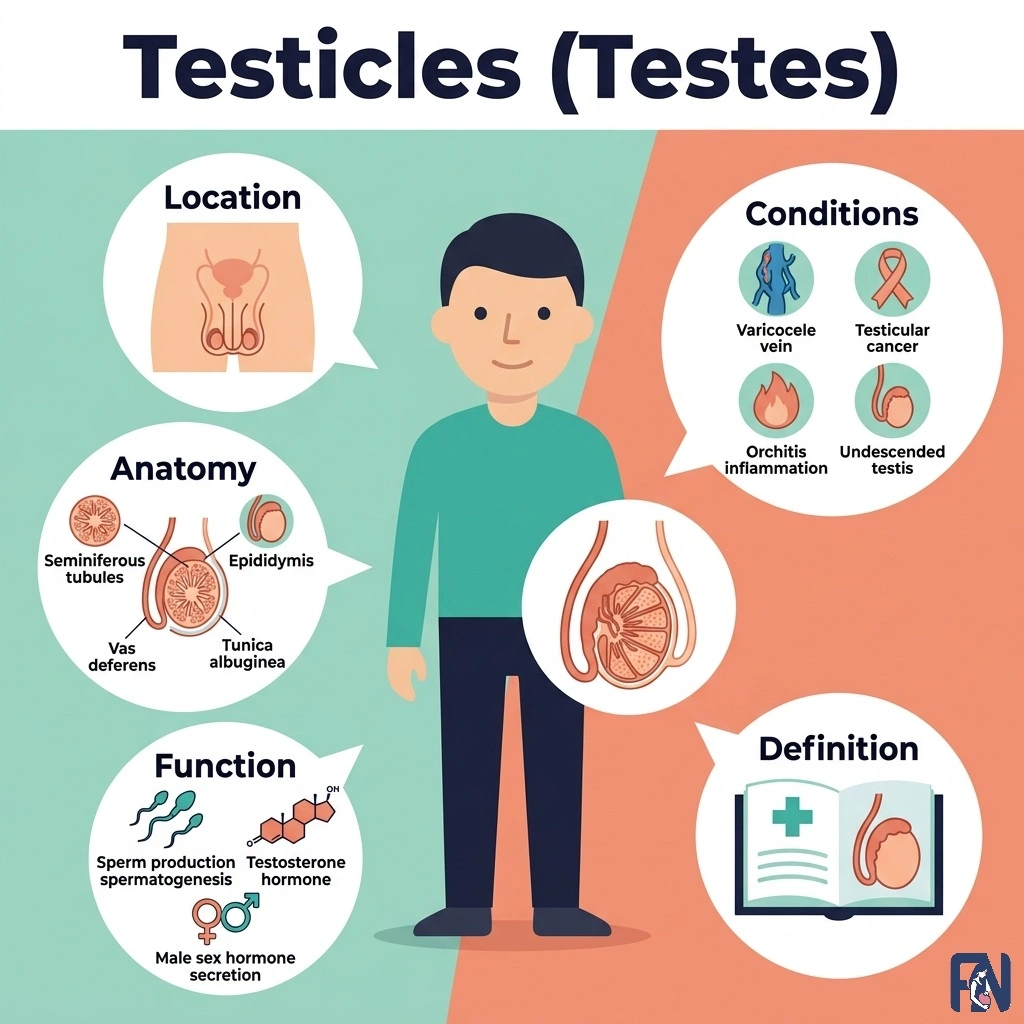
The testicles refer to the two male reproductive glands that produce sperm and testosterone. Testes are the primary reproductive organs of the male reproductive system. They are located in the scrotum and work continuously to support fertility and hormone production. Testosterone from the testicles drives sperm production and also shapes muscle mass, bone density, and overall male health. Understanding testicular anatomy and function makes it easier to recognize when something feels different and to seek care early.
Some common testicular conditions include testicular cancer, testicular torsion, epididymitis, orchitis, varicocele, and hydrocele. Monitoring testicular health through regular self-exams and medical diagnosis of new lumps, swelling, or pain helps catch problems while they are most treatable. Treatment options range from antibiotics and lifestyle changes to surgery, orchiectomy, or chemotherapy, depending on the condition and its severity.
What Are Testicles?
Testicles, also known as testes, are the male gonads located within the scrotum, working continuously to produce sperm and testosterone for reproduction. There are two of these glands, each situated on opposite sides of the scrotum, functioning independently to maintain male fertility and hormonal balance. Testes work by using specialized cells inside each testicle to generate sperm and release hormones directly into the bloodstream, keeping the male reproductive system running on a steady cycle.
Maintaining good testicular health is essential, as any injury, infection, or hormonal imbalance affecting these glands can disrupt sperm production, reduce testosterone levels, and impact overall male fertility and well-being. A 2022 editorial in Frontiers in Endocrinology indicates that male factors contribute to nearly 50% of failed pregnancy attempts, with a 20% rate as the sole cause and a 30% rate as a contributing factor.
Where Are Testicles Located?
Testicles are located in the scrotum, a pouch of skin that hangs outside the body just below the penis. This external position keeps the testicles about 2 to 4 degrees cooler than the rest of the body, which is essential for healthy sperm production, since sperm cannot develop properly at core body temperature. A typical adult testicle measures about 4 to 5 centimeters in length, roughly the size of a large olive. Understanding this part of male anatomy helps explain why conditions like excessive heat exposure can affect fertility.
What Is the Anatomy of the Testicles?
The anatomy of the testicles includes the seminiferous tubules, epididymis, spermatic cord, and the Leydig and Sertoli cells that support sperm and hormone production. Each structure plays a distinct role in producing, transporting, or regulating sperm and testosterone.
The main structures of the testicular anatomy are listed below.
- Seminiferous Tubules: The seminiferous tubules are the tightly coiled structures inside each testicle where sperm cells are produced. They make up most of the testicle’s internal volume and are lined with specialized cells that support sperm development. This is the primary site of sperm production within the testicles.
- Epididymis: The epididymis refers to the coiled tube attached to the back of each testicle that connects it to the vas deferens. Sperm travel through the epididymis after leaving the seminiferous tubules, gaining the ability to swim and fertilize an egg. It stores and matures sperm before ejaculation, typically over a period of about two weeks.
- Spermatic Cord: The spermatic cord refers to the bundle of tissue that suspends each testicle within the scrotum and connects it to the rest of the body. It contains blood vessels, nerves, and the vas deferens, which together supply and support each testicle. Damage or twisting of the spermatic cord can disrupt blood flow and testicular function.
- Leydig and Sertoli Cells: Leydig and Sertoli cells are the two main types of specialized cells found within testicular tissue. Leydig cells produce testosterone in response to hormone signals from the brain, directly influencing hormone levels throughout the body. Sertoli cells support developing sperm cells as they mature within the seminiferous tubules.
What Hormones Are Released by the Testes?
The hormones released by the testes are listed below.
- Testosterone: Testosterone is the primary male sex hormone produced by Leydig cells within the testicles. It drives sperm production, sex drive, and the development of secondary male characteristics such as facial hair and a deeper voice. Testosterone levels are tightly regulated by signals from the brain to maintain steady function.
- Inhibin B: Inhibin B is a hormone produced by Sertoli cells within the testicles that directly reflects the health of ongoing sperm production.Testosterone and inhibin B production are governed by the hypothalamic-pituitary-gonadal (HPG) axis, through which the brain releases LH and FSH to stimulate the testes, while the testes send hormonal feedback to maintain balanced function. Low inhibin B levels can indicate reduced testicular function.
- Anti-Müllerian Hormone (AMH): AMH is a hormone produced by Sertoli cells within the testicles, essential during fetal development for suppressing female reproductive structures and ensuring proper male tract formation. In adulthood, it continues to be released and serves as a valuable clinical marker of Sertoli cell health and sperm-producing capacity.
- Estradiol: Estradiol is a form of estrogen produced in small amounts by the testes, primarily through the conversion of testosterone within Sertoli and Leydig cells. It helps modulate libido, supports bone density, regulates brain function, and aids in sperm maturation. Balanced estradiol levels are essential, as extremes can disrupt fertility and overall well-being.
- Insulin-like factor 3 (INSL3): INSL3 is a hormone produced almost exclusively by Leyd ig cells within the testicles, playing a crucial role during fetal development by guiding testicular descent into the scrotum. In adulthood, it serves as a reliable marker of Leydig cell function and contributes to bone metabolism, muscle health, and reproductive tissue maintenance.
What Are the Functions of the Testicles?
The functions of the testicles include producing sperm, generating testosterone, and regulating temperature to support healthy sperm development.
The main functions of the testicles are listed below.
- Sperm Production: Sperm production refers to the testicles’ ongoing process of generating new sperm cells within the seminiferous tubules. This process, called spermatogenesis, occurs continuously throughout adult life and takes about 64 to 72 days to complete. Consistent sperm production is essential for maintaining male fertility.
- Testosterone Production: Testosterone production refers to the testicles’ role in synthesizing and releasing testosterone, the primary male hormone. This process supports male hormone balance and drives the development of secondary sexual characteristics, including muscle mass and body hair. Testosterone levels typically peak in early adulthood and gradually decline with age.
- Other Hormonal Regulation: Other hormonal regulation means the testicles’ production of additional hormones beyond testosterone, primarily through Sertoli and Leydig cells. These hormones include Inhibin B, Anti-Müllerian Hormone (AMH), estradiol, and insulin-like growth factor 3 (INSL3), each playing distinct roles in fertility and development. For instance, Inhibin B and AMH help regulate sperm production and fetal reproductive tract formation, while estradiol and INSL3 support bone health, libido, and testicular descent.
- Temperature Regulation: Temperature regulation is the scrotum’s ability to keep the testicles slightly cooler than the rest of the body. This cooler environment supports healthy sperm production, since sperm development is highly sensitive to heat. Prolonged heat exposure from conditions such as tight clothing or frequent hot baths can reduce sperm quality over time.
What Are the Common Testicular Conditions?
The common testicular conditions include testicular cancer, testicular torsion, epididymitis, orchitis, varicocele, and hydrocele.
The common testicular conditions are listed below.
- Testicular Cancer: Testicular cancer refers to a malignant growth that develops within the tissue of a testicle, most often affecting men between the ages of 15 and 35. Risk factors include an undescended testicle, family history, and prior testicular cancer, though the exact cause is often unclear. Common symptoms include a painless lump or swelling, and possible complications include the cancer spreading to nearby lymph nodes or organs if untreated.
- Testicular Torsion: Testicular torsion is a twisted spermatic cord that cuts off blood supply to the testicle. It is considered an emergency condition, often causing sudden and severe pain along with swelling and nausea. Without prompt treatment, testicular torsion can lead to permanent loss of the affected testicle.
- Epididymitis: Epididymitis is the inflammation of the epididymis, most often caused by a bacterial infection, including sexually transmitted infections. Symptoms typically include pain, swelling, and tenderness on one side of the scrotum, sometimes with fever. Left untreated, epididymitis can lead to abscess formation or reduced fertility over time.
- Orchitis: Orchitis refers to inflammation of one or both testicles, commonly caused by a viral or bacterial infection, including the mumps virus. Symptoms include swelling, tenderness, and a feeling of heaviness in the affected testicle. Possible complications include reduced testicular size and, in some cases, impaired fertility.
- Varicocele: A varicocele refers to an enlargement of the veins within the scrotum, similar to varicose veins elsewhere in the body. It commonly develops during puberty and may cause a dull ache or heaviness, especially after standing for long periods. Left unmanaged, a varicocele can contribute to reduced sperm quality and infertility.
- Hydrocele: A hydrocele refers to a fluid buildup around a testicle that causes the scrotum to swell. It often develops without a clear cause in adults, while in infants it may result from incomplete closure of a natural passage. Symptoms are usually limited to painless swelling, though large hydroceles can cause discomfort or a feeling of heaviness.
What Are the Symptoms of Testicular Problems?
The common symptoms of testicular problems are listed below.
- Lump: A testicular lump refers to a firm or hard area felt on or within the testicle. It can be a sign of testicular cancer and requires prompt medical evaluation.
- Swelling: Testicular swelling refers to visible enlargement of one or both testicles. It may result from infection, fluid buildup, or a varicocele affecting the surrounding tissue.
- Pain: Testicular pain refers to discomfort ranging from mild aching to sharp, severe pain in one or both testicles. Sudden, severe pain may signal testicular torsion, an emergency condition requiring immediate care.
- Heaviness: Testicular heaviness refers to a dragging or weighted sensation in the scrotum. This condition is commonly associated with a varicocele or hydrocele affecting one of the testicles.
How Are Testicular Conditions Diagnosed?
The methods used to diagnose testicular conditions are listed below.
- Physical Examination: A physical examination is a hands-on exam in which a doctor checks the size, shape, and texture of each testicle. Doctors look for lumps, swelling, tenderness, or asymmetry that might indicate an underlying condition.
- Ultrasound: An ultrasound is an imaging test that uses sound waves to create detailed pictures of the testicles. It helps visualize the testicles and detect abnormalities such as tumors, cysts, or torsion.
- Tumor Markers: Tumor markers are substances measured through blood tests that can indicate the presence of testicular cancer. Alongside a testicular examination and ultrasound, tumor marker testing helps confirm a diagnosis and guide treatment planning.
What Is a Testicular Self-Examination?
A testicular self-examination is a simple screening check performed at home to feel for lumps, swelling, or changes in the testicles. Most doctors recommend performing a self-exam once a month, ideally after a warm shower when the scrotal skin is relaxed. Healthy testes typically feel smooth, firm, and slightly rubbery, without hard lumps or sudden changes in size. This routine supports early detection of testicular cancer and other conditions. Any new lump, persistent pain, or noticeable change in size or shape should prompt a visit to a doctor.
How to Keep Testicles Healthy?
The habits that support testicular health are listed below.
- Limit Heat Exposure: Limiting heat exposure means avoiding prolonged use of hot tubs, saunas, and tight clothing, since excess heat can impair sperm production over time.
- Wear Protective Equipment: Wearing protective equipment, such as an athletic cup during contact sports, helps prevent injury that could damage testicular tissue or function.
- Maintain a Healthy Lifestyle: Maintaining a healthy lifestyle, including regular exercise and a balanced diet, supports hormone balance and long-term testicular health.
- Seek Quick Treatment: Seeking quick treatment for pain, swelling, or lumps ensures conditions are caught early, when treatment tends to be simpler and more effective.
What Are the Best Treatments for Testicular Conditions in India?
The best treatments for testicular conditions in India include antibiotics, surgery, orchiectomy, and chemotherapy, offered at major hospitals with experienced urologists and modern diagnostic facilities.
The best treatments for testicular conditions in India are listed below.
- Antibiotics: Antibiotics are commonly prescribed to treat bacterial infections such as epididymitis, usually resolving symptoms within one to two weeks. This treatment sits at the lower end of the cost range compared to surgical options.
- Surgery: Surgery is used to correct conditions such as testicular torsion or a large hydrocele, restoring normal blood flow or anatomy. Surgical costs vary depending on the complexity of the procedure and the hospital chosen.
- Orchiectomy: Orchiectomy is the surgical removal of a testicle, typically performed when testicular cancer is confirmed or when torsion has caused irreversible damage. This procedure falls in the mid-to-higher range of treatment costs due to the surgical expertise required.
- Hormone Therapy: Hormone therapy involves using medications or synthetic hormones, such as testosterone replacement or gonadotropin stimulation, to correct hormonal imbalances or stimulate fertility after testicular damage. The cost generally falls in the mid-range, varying based on the specific drugs prescribed and the duration of the treatment regimen.
- Chemotherapy: Chemotherapy uses medication to destroy cancer cells and is typically used after orchiectomy for testicular cancer that has spread. It falls at the higher end of the cost range, depending on the number of treatment cycles needed.
How Much Does Testicular Condition Treatment Cost in India?
The cost of testicular condition treatment in India ranges from ₹30,000 to ₹30,00,000 depending on the diagnosis, treatment approach, and hospital chosen. Consultations and diagnostic tests, including ultrasound and blood work, typically add a few thousand rupees to the overall cost. Treatment costs vary further by approach, with medication and antibiotics at the lower end and surgery, orchiectomy, or chemotherapy at the higher end.
Can Testicular Conditions Cause Infertility?
Yes, testicular conditions can cause infertility because they can disrupt sperm production, sperm quality, or the hormone balance needed for conception. These conditions interfere with how well the testicles generate healthy sperm or maintain steady testosterone levels. Common underlying conditions associated with infertility include varicocele, testicular torsion, orchitis, and testicular cancer, all of which can directly affect reproductive health.
How to Find Quality Treatments in India for Infertility Caused by Testicular Conditions?
To find quality and affordable treatment in India for infertility caused by testicular conditions, look for clinics that perform comprehensive assessments of testicular structure, location, and function. They should also offer appropriate fertility treatments based on your individual diagnosis.
Important treatments may include medication, surgery such as varicocele repair or correction of obstructive conditions, hormone therapy when indicated, sperm retrieval procedures, and assisted reproductive technologies like IVF or ICSI.
Check the clinic’s experience with male infertility, specialist qualifications, diagnostic facilities, treatment success rates, transparent pricing, patient reviews, and personalized treatment plans. Visit Fertility Network to compare and find affordable fertility treatment options near you in India, helping you connect with trusted fertility specialists and clinics.

Fathima Zahra is a reproductive health content specialist at FertilityNetwork.in — India’s largest independent fertility clinic directory and patient education platform.
Fathima’s work covers the full spectrum of reproductive medicine, from foundational biology to advanced fertility treatment. Her published articles span reproductive anatomy (ovaries, uterus, fallopian tubes, testes), core reproductive processes (ovulation, fertilization, implantation, the menstrual cycle), reproductive hormones (estrogen, progesterone, testosterone, FSH, LH, AMH, and prolactin), and the clinical conditions that cause infertility in both men and women.
On the male side, her research covers conditions including azoospermia, oligospermia, asthenozoospermia, teratozoospermia, varicocele, erectile dysfunction, Klinefelter syndrome, and Y chromosome microdeletion. On the female side, she writes about PCOS, endometriosis, uterine fibroids, anovulation, diminished ovarian reserve, premature ovarian insufficiency, tubal blockage, pelvic inflammatory disease, and Turner syndrome.
Her treatment coverage includes intrauterine insemination (IUI), in vitro fertilization (IVF), intracytoplasmic sperm injection (ICSI), egg retrieval, embryo transfer, egg freezing, sperm freezing, and oncofertility — providing patients with detailed, process-level understanding of each procedure, its clinical indications, success rates, and costs.
Every article Fathima publishes follows a structured, evidence-based research methodology:
1. Source verification against ICMR (Indian Council of Medical Research) national fertility and ART guidelines
2. Cross-referencing with ESHRE (European Society of Human Reproduction and Embryology) clinical protocols
3. Alignment with ASRM (American Society for Reproductive Medicine) evidence-based practice guidelines
4. Citation of PubMed-indexed, peer-reviewed studies published within the last 5 years
5. Verification of all diagnostic thresholds, hormonal reference ranges, and clinical statistics against current international standards
All content authored by Fathima undergoes editorial review by the FertilityNetwork Medical Research Board before publication, ensuring clinical accuracy and factual integrity across every article published on the platform.
Fathima’s content is editorially independent. FertilityNetwork.in does not publish sponsored medical opinions, and no article is written to promote specific clinics, doctors, or fertility treatments.
Leave a Reply