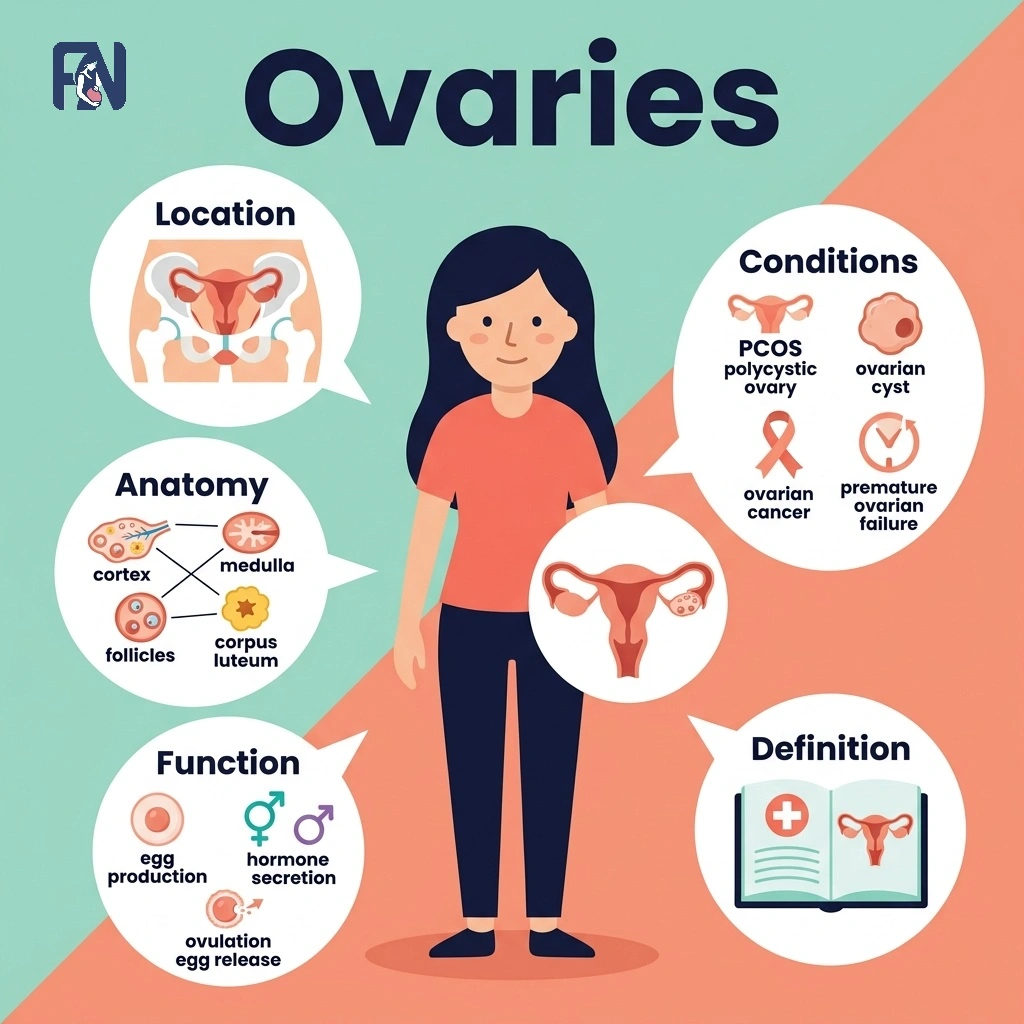
The ovaries basically refer to the two reproductive organs that store eggs and produce hormones. Women typically have two ovaries, one on each side of the uterus, connected to the fallopian tubes. Each ovary contains follicles that hold immature eggs, along with the tissue and blood vessels that support hormone production. The ovaries produce estrogen and progesterone, which regulate the menstrual cycle, support pregnancy, and influence fertility from puberty through menopause.
The ovarian cycle consists of the follicular, ovulation, and luteal phases that repeat roughly every month. Some of the major ovarian conditions are PCOS, ovarian cysts, ovarian torsion, premature ovarian insufficiency, and ovarian cancer, along with the symptoms that signal a problem. Regular monitoring of ovarian health through pelvic exams, ultrasounds, and hormone testing helps detect these conditions early, and a doctor should be consulted if symptoms such as pelvic pain or irregular periods persist. Treatment options range from medication and lifestyle changes to laparoscopic surgery, depending on the condition and its severity.
What Are the Ovaries?
The ovaries are paired reproductive organs that function as both gonads and endocrine organs, producing female gametes called oocytes while generating the hormones that regulate reproductive function. As gonads, the ovaries sit at the center of the female reproductive system, working alongside the uterus and fallopian tubes to support conception. They carry out the dual role of releasing mature eggs during ovulation and secreting estrogen and progesterone to regulate the menstrual cycle.
Most women have two ovaries, which provides a biological backup, since ovulation can continue even if one ovary is removed or damaged. Healthy ovaries are essential for fertility, hormonal balance, and long-term reproductive health. According to recent research by the World Health Organization, infertility impacts roughly 1 in 6 adults globally, with a declining ovarian reserve and poor egg quality serving as leading causes of female infertility.
Where Are the Ovaries Located?
The ovaries are located in the pelvis, one on each side of the uterus, below the fallopian tubes and close to the pelvic sidewall. Each ovary sits just below the fimbriated end of its corresponding fallopian tube, held in place by supporting ligaments that connect it to the uterus and pelvic wall. A typical ovary is almond-shaped and measures about 3 to 5 centimeters in length, though its size can shift slightly with the menstrual cycle and age. As with other parts of the anatomy of a woman’s body, exact ovarian position can vary slightly from person to person and may shift with pregnancy or prior pelvic surgery.
What Is the Anatomy of the Ovaries?
The anatomy of the ovaries includes the outer cortex, inner medulla, surface epithelium, follicles at various stages of development, and the blood vessels and ligaments that support each ovary. These structures work together to store and mature eggs, produce hormones, and maintain a stable blood supply throughout the menstrual cycle.
The main structures of the ovarian anatomy are listed below.
- Ovarian Structure: The ovarian structure consists of an outer cortex, which contains developing follicles, and an inner medulla containing blood vessels and connective tissue. A layer of germinal epithelium covers the ovary’s surface, protecting its internal structures. Connective tissue and a dedicated blood supply support the cortex and medulla throughout each phase of the reproductive cycle.
- Ovarian Follicles: Ovarian follicles are small, fluid-filled sacs within the ovary that each contain a single developing egg. Follicles progress through several stages, from primordial and primary follicles to secondary follicles and finally the mature Graafian follicle. This process, known as folliculogenesis, allows one dominant follicle to mature and release its egg during ovulation each cycle.
- Blood Supply and Ligaments: The blood supply and ligaments of the ovaries include the ovarian artery and ovarian vein, which deliver oxygenated blood and drain the ovary, along with lymphatic drainage that supports immune function. The ovarian ligament anchors the ovary to the uterus, while the suspensory ligament connects it to the pelvic wall and carries the main ovarian blood vessels. Together, these ligaments stabilize the ovary and maintain the vascular supply it needs to function.
- Oocytes and Egg Development: Oocytes and egg development are the process by which immature egg cells, or oocytes, mature within ovarian follicles through oogenesis, a process tightly regulated by hormone signals. A woman’s full supply of oocytes forms before birth, and this ovarian reserve steadily declines with age, affecting both fertility and hormone production over time. During each menstrual cycle, one oocyte typically completes egg maturation and is released at ovulation in response to a surge of luteinizing hormone, while the rest remain dormant or are lost naturally.
What Hormones Are Produced by the Ovaries?
Hormones produced by the ovaries include estrogen, progesterone, testosterone, inhibin, and relaxin, which regulate the menstrual cycle, support fertility, maintain pregnancy, and contribute to overall reproductive health.
The hormones produced by the ovaries are listed below.
- Estrogen: Estrogen refers to the primary female sex hormone responsible for puberty, menstrual regulation, and the development of secondary sexual characteristics. Estradiol, the main form of estrogen, supports breast development and helps maintain bone health throughout a woman’s reproductive years. Estrogen levels rise and fall predictably across the menstrual cycle, driving follicle growth and preparing the uterine lining.
- Progesterone: Progesterone refers to the hormone released mainly by the corpus luteum after ovulation to prepare the endometrium for pregnancy. It thickens and stabilizes the uterine lining to support implantation if fertilization occurs. If pregnancy does not happen, progesterone levels drop, triggering the start of a new menstrual cycle.
- Testosterone: Testosterone is an androgen produced in small amounts by the ovaries, contributing to libido, muscle tone, and overall hormonal balance in women. It is considered a secondary ovarian hormone. It stimulates sex drive and helps maintain muscle mass and bone density by acting on cells throughout the body. Inhibin is a protein-based secondary hormonal substance released by the ovaries
- Inhibin: Inhibin is a hormone produced by ovarian follicles that suppresses follicle-stimulating hormone release from the pituitary gland, helping regulate follicle development.
- Relaxin: Relaxin is a hormone released mainly during the luteal phase and pregnancy that relaxes the uterine muscles and pelvic ligaments to support implantation and later childbirth. Relaxin is a peptide secondary hormonal substance secreted by the ovaries.
What Is the Hormonal Regulation of the Ovaries?
Hormonal regulation of the ovaries refers to the feedback loop known as the hypothalamic-pituitary-ovarian axis, which coordinates ovarian functions with signals from the brain. The hypothalamus releases hormones that prompt the pituitary gland to secrete gonadotropins, namely FSH and LH, which stimulate follicle growth and trigger ovulation. In turn, rising and falling estrogen and progesterone levels send hormonal feedback back to the brain, adjusting FSH and LH output throughout the cycle.
What Are the Functions of the Ovaries?
The functions of the ovaries include producing and releasing eggs, generating reproductive hormones, and supporting the physical processes that make conception and pregnancy possible.
The main functions of the ovaries are listed below.
- Egg Production: Egg production refers to the ovaries’ ongoing process of developing ova each month through oocyte maturation within growing follicles. Multiple follicles begin developing at the start of each reproductive cycle, though typically only one reaches full maturity. That dominant follicle releases its egg during ovulation, making it available for fertilization.
- Ovulation: Ovulation refers to the release of a mature egg from the dominant follicle, typically occurring around the midpoint of the menstrual cycle. A surge in luteinizing hormone (LH) triggers follicular rupture, allowing the egg to travel into the fallopian tube. This event marks the beginning of the fertile window, when conception is most likely.
- Hormone Production: Hormone production in the ovaries refers to their endocrine function of secreting estrogen and progesterone, the primary female sex hormones. These hormones regulate the menstrual cycle, support pregnancy, and maintain hormonal balance throughout a woman’s reproductive years. Disruptions in ovarian hormone production can affect fertility, bone health, and overall well-being.
- Reproductive Function: The reproductive function of the ovaries refers to their role in enabling fertilization, implantation, and pregnancy by working together with the uterus and fallopian tubes. The ovaries supply the egg, while the fallopian tubes provide the site for fertilization and the uterus supports implantation. This coordinated system underlies female fertility from ovulation through early pregnancy.
What Is the Ovarian Cycle?
The ovarian cycle is the monthly hormonal process that governs egg development, and it consists of 3 phases, including the follicular phase, ovulation, and the luteal phase.
The 3 phases of the ovarian cycle are listed below.
- Follicular Phase (Days 1–13): The follicular phase refers to the first part of the ovarian cycle, beginning on the first day of menstruation and lasting until ovulation. This phase typically spans from day 1 to day 13 of a standard 28‑day cycle. Rising estrogen production drives follicle growth, allowing several follicles to develop before one becomes dominant. This phase also thickens the uterine lining in preparation for a potential pregnancy.
- Ovulation (Day 14): The ovulation phase refers to the brief midcycle period when a surge in luteinizing hormone triggers the release of a mature egg. This phase typically occurs on day 14 of a standard 28‑day cycle. This LH surge causes the dominant follicle to rupture, releasing the egg on ovulation day. The released egg then travels into the fallopian tube, where fertilization can occur if sperm are present.
- Luteal Phase (Days 15–28): The luteal phase refers to the final stage of the ovarian cycle, occurring after ovulation and lasting about two weeks. This phase spans from day 15 to day 28 of the cycle. During this phase, the corpus luteum produces progesterone, supporting endometrial preparation for possible implantation. If fertilization does not occur, progesterone levels fall, the corpus luteum breaks down, and menstruation begins, restarting the cycle relevant to fertility.
What Is the Connection Between Ovaries and Fertility?
The connection between ovaries and fertility is direct, since the ovaries store, mature, and release the eggs needed for conception, and they produce hormones that regulate ovulation and support early pregnancy. Each month, the ovaries prepare and release an egg during ovulation, making fertilization possible if it meets sperm in the fallopian tube. Problems with egg production, ovulation, or hormone balance can make it more difficult to conceive, which is why healthy ovarian function is closely tied to overall fertility.
How to Keep Ovaries Healthy?
To keep ovaries healthy, follow the tips mentioned below.
- Maintain a Healthy Weight: A healthy weight is a body weight within a normal range that supports balanced hormone levels and regular ovulation, since excess or very low body fat can disrupt reproductive health.
- Exercise Regularly: Exercise is regular physical activity that improves blood flow, supports hormonal balance, and helps maintain a healthy weight, all of which benefit ovarian function.
- Eat a Balanced Diet: A balanced diet is an eating pattern rich in whole foods, healthy fats, and antioxidants that supports egg quality and hormone production over time.
- Practice Preventive Care: Preventive care is a proactive approach to reproductive health, including avoiding smoking and managing stress, that helps protect long-term ovarian function.
- Schedule Regular Checkups: Regular checkups are periodic visits with a gynecologist that allow early detection of ovarian conditions through exams, ultrasounds, or hormone testing.
Is It Possible to Get Pregnant With One Ovary?
Yes, it is possible to get pregnant with one ovary because the remaining ovary can ovulate every cycle, maintaining normal fertility in most cases. Even after surgery or an ovarian condition that requires removing one ovary, the other typically compensates by releasing an egg monthly. Fertility may be somewhat reduced only if the remaining ovary also has an underlying issue.
What Are the Common Ovarian Conditions?
The common ovarian conditions include PCOS, ovarian cysts, ovarian torsion, premature ovarian insufficiency, and ovarian cancer
The common ovarian conditions are listed below.
- Polycystic Ovary Syndrome (PCOS): PCOS refers to a hormonal disorder in which the ovaries produce excess androgens and develop multiple small follicles, disrupting normal ovulation and menstrual function. Hormonal imbalance and insulin resistance increase the risk of PCOS and commonly cause irregular periods, acne, and excess hair growth. Untreated PCOS may lead to infertility and increase the risk of metabolic disorders.
- Ovarian Cysts: Ovarian cysts refer to fluid-filled sacs that develop on or within an ovary and vary in size, type, and potential health effects. They may occur as a functional cyst, dermoid cyst, or hemorrhagic cyst and can cause pelvic pain, bloating, or pressure. If left untreated, some cysts may rupture, bleed, or lead to ovarian torsion.
- Ovarian Torsion: Ovarian torsion is the twisting of an ovary around its supporting tissues, reducing or completely blocking its blood supply. A twisted ovary is usually associated with an ovarian cyst or enlarged ovary and is considered an emergency condition. Symptoms include sudden severe pelvic pain, and delayed treatment can result in loss of the ovary.
- Premature Ovarian Insufficiency: Premature ovarian insufficiency refers to a condition in which the ovaries lose normal function before the age of forty because of early ovarian failure. It causes hormone deficiency, irregular or absent periods, and symptoms of early menopause, including hot flushes and vaginal dryness. The condition can lead to infertility and increase the risk of osteoporosis.
- Ovarian Cancer: Ovarian cancer is the uncontrolled growth of abnormal cells in the ovary that form an ovarian tumor and may spread to other tissues. Risk factors include age, inherited genetic mutations, and family history, while cancer symptoms may include bloating, pelvic pain, and changes in appetite, making early detection important. Diagnosis may involve imaging and a CA-125 blood test, and treatment can include surgery and chemotherapy to prevent serious complications.
What Are the Symptoms of Ovarian Problems?
The symptoms of ovarian problems include pelvic pain, bloating, irregular periods, abdominal swelling, infertility, and pain during intercourse.
The symptoms of ovarian problems are listed below.
- Pelvic Pain: Pelvic pain refers to discomfort in the lower abdomen that can range from mild to severe. It can result from ovarian cysts, inflammation, or other ovarian conditions affecting the surrounding tissue.
- Bloating: Bloating refers to the feeling of fullness or swelling in the abdomen. It may result from fluid buildup or an enlarged ovary pressing on nearby organs.
- Irregular Periods: Irregular periods refer to menstrual cycles that vary in length, timing, or flow from month to month. Hormonal imbalance caused by ovarian conditions such as PCOS can disrupt cycle regularity.
- Abdominal Swelling: Abdominal swelling refers to visible or noticeable enlargement of the abdomen. It can indicate an enlarged ovary, an ovarian cyst, or, in rare cases, ovarian cancer.
- Infertility: Infertility refers to the inability to conceive after a year or more of regular, unprotected intercourse. Disrupted ovulation or egg quality issues linked to ovarian conditions can prevent conception.
- Pain During Intercourse: Pain during intercourse refers to discomfort or sharp pain felt during or after sexual activity. It can result from ovarian cysts, endometriosis, or pelvic inflammation affecting nearby structures.
For any of the symptoms above ealy diagnosis playes a vital role in a woman’s life.
How Do Doctors Diagnose Ovarian Health?
Doctors evaluate ovarian health using a combination of physical examination, imaging, and laboratory testing to check for cysts, hormonal imbalances, and other abnormalities.
The common methods used to evaluate ovarian health are listed below.
- Pelvic Examination: A pelvic examination is a physical exam in which a doctor checks the ovaries, uterus, and surrounding structures for abnormalities. It helps doctors detect tenderness, masses, or irregularities and is typically recommended during routine gynecological visits or when symptoms arise.
- Ultrasound: An ultrasound, including a transvaginal ultrasound, is an imaging test that uses sound waves to create detailed images of the ovaries. It helps visualize the ovaries and detect cysts, tumors, or other structural abnormalities.
- Hormone Testing: Hormone testing involves blood tests that measure reproductive hormone levels to assess ovarian function. Common markers include AMH, FSH, and estradiol, which help evaluate ovarian reserve and hormonal balance.
- Fertility Testing: Fertility testing involves a series of exams and blood tests that evaluate ovarian reserve and function. Results help guide fertility treatment decisions, including whether medication, IUI, or IVF may be appropriate.
What Are the Best Treatments for Ovarian Conditions in India?
The best treatments for ovarian conditions in India include medication, minimally invasive surgery, and advanced fertility care available across major metropolitan cities with experienced specialists and modern diagnostic facilities. The best treatments for ovarian conditions in India are listed below.
- Delhi: Delhi offers advanced gynecological and fertility centers with specialists in PCOS management, laparoscopic surgery, and IVF, with treatment costs varying by procedure and hospital.
- Mumbai: Mumbai is home to leading fertility hospitals offering ovarian cyst removal, hormone therapy, and IVF, with a wide cost range depending on treatment complexity.
- Bangalore: Bangalore provides access to reproductive endocrinologists and fertility clinics specializing in ovarian condition diagnosis and treatment, with costs varying by clinic and procedure type.
- Chennai: Chennai has established fertility centers offering ovarian surgery, hormone testing, and IVF services, with treatment cost ranges depending on the specific ovarian condition.
- Hyderabad: Hyderabad offers well-equipped fertility hospitals providing laparoscopic ovarian surgery and hormonal treatment, with costs varying based on diagnosis and required procedures.
- Kolkata: Kolkata has growing fertility infrastructure with specialists treating PCOS, ovarian cysts, and infertility, offering a range of cost options depending on treatment type.
- Pune: Pune provides access to fertility specialists and diagnostic centers for ovarian conditions, with treatment cost ranges depending on the chosen hospital and procedure.
How Much Does Ovarian Condition Treatment Cost in India?
The cost of ovarian condition treatment in India ranges from ₹5,000 to ₹10,00,000 depending on the diagnosis, treatment approach, and hospital chosen. Basic medication and hormone therapy sit at the lower end, while laparoscopic procedures cost more due to surgical expertise and facility charges. Complex surgeries, such as those for ovarian cancer or advanced endometriosis, fall at the higher end of the cost range.
How Do Ovarian Conditions Cause Infertility?
Ovarian conditions can cause infertility via disruption of ovulation, reduced egg quality, or hormonal imbalance needed for successful conception. Conditions such as PCOS, premature ovarian insufficiency, endometriosis, and ovarian cysts can directly affect reproductive health, decrease fertility, and lead to infertility. Early diagnosis and proper treatment may improve reproductive outcomes and increase the chances of pregnancy.
How to Find Proper Treatments in India for Infertility Caused by Ovarian Problems?
To find proper treatments in India for infertility caused by ovarian conditions, consult a fertility specialist for an accurate diagnosis and personalised care. The assessment should examine the location of ovaries, their anatomy, and the functions of ovaries to understand their role in fertility. Doctors should also assess the different phases of the menstrual cycle and determine how specific ovarian conditions affect fertility. It is important to choose clinics that provide evidence-based treatment and have experience managing infertility related to ovarian disorders. Fertility Network helps people find affordable fertility treatment options near them in India and connect with qualified fertility specialists.

Fathima Zahra is a reproductive health content specialist at FertilityNetwork.in — India’s largest independent fertility clinic directory and patient education platform.
Fathima’s work covers the full spectrum of reproductive medicine, from foundational biology to advanced fertility treatment. Her published articles span reproductive anatomy (ovaries, uterus, fallopian tubes, testes), core reproductive processes (ovulation, fertilization, implantation, the menstrual cycle), reproductive hormones (estrogen, progesterone, testosterone, FSH, LH, AMH, and prolactin), and the clinical conditions that cause infertility in both men and women.
On the male side, her research covers conditions including azoospermia, oligospermia, asthenozoospermia, teratozoospermia, varicocele, erectile dysfunction, Klinefelter syndrome, and Y chromosome microdeletion. On the female side, she writes about PCOS, endometriosis, uterine fibroids, anovulation, diminished ovarian reserve, premature ovarian insufficiency, tubal blockage, pelvic inflammatory disease, and Turner syndrome.
Her treatment coverage includes intrauterine insemination (IUI), in vitro fertilization (IVF), intracytoplasmic sperm injection (ICSI), egg retrieval, embryo transfer, egg freezing, sperm freezing, and oncofertility — providing patients with detailed, process-level understanding of each procedure, its clinical indications, success rates, and costs.
Every article Fathima publishes follows a structured, evidence-based research methodology:
1. Source verification against ICMR (Indian Council of Medical Research) national fertility and ART guidelines
2. Cross-referencing with ESHRE (European Society of Human Reproduction and Embryology) clinical protocols
3. Alignment with ASRM (American Society for Reproductive Medicine) evidence-based practice guidelines
4. Citation of PubMed-indexed, peer-reviewed studies published within the last 5 years
5. Verification of all diagnostic thresholds, hormonal reference ranges, and clinical statistics against current international standards
All content authored by Fathima undergoes editorial review by the FertilityNetwork Medical Research Board before publication, ensuring clinical accuracy and factual integrity across every article published on the platform.
Fathima’s content is editorially independent. FertilityNetwork.in does not publish sponsored medical opinions, and no article is written to promote specific clinics, doctors, or fertility treatments.
Leave a Reply