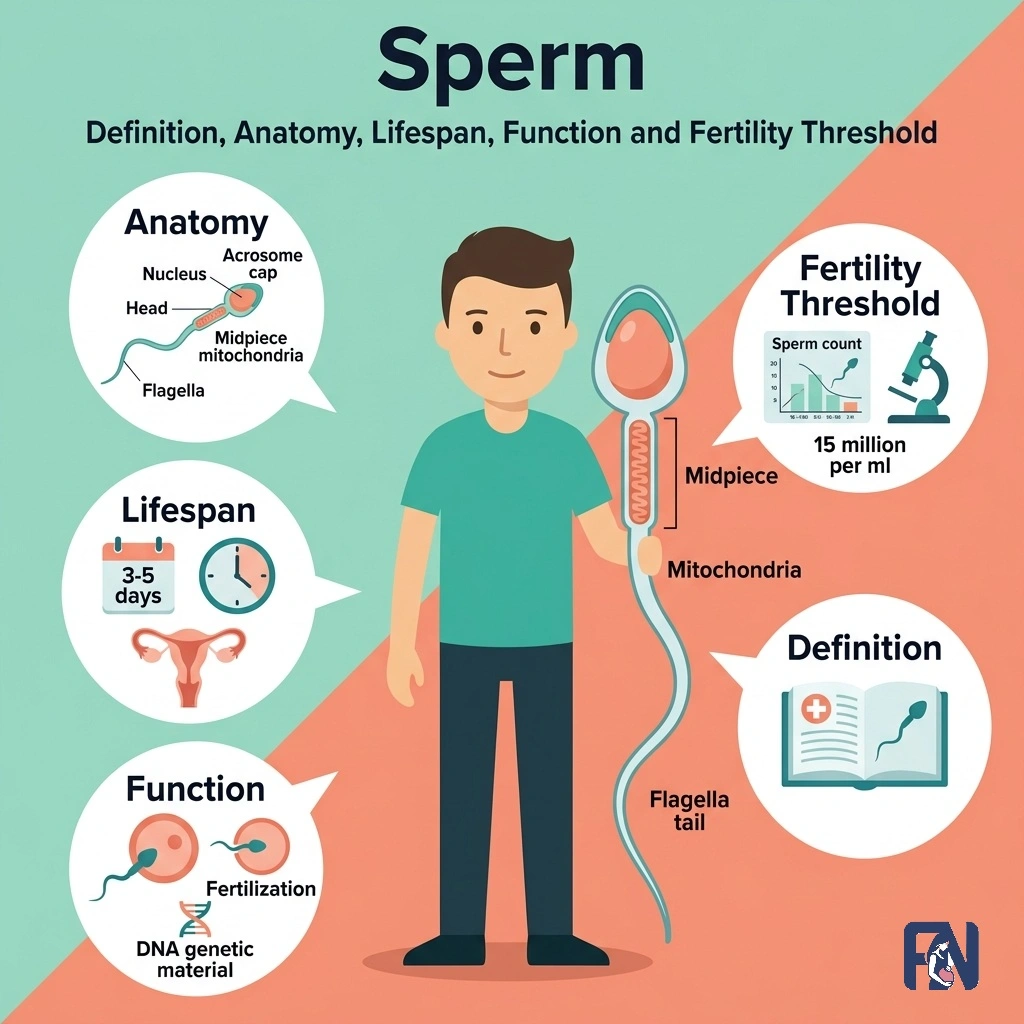
Sperm refers to the male reproductive cell that fertilizes a female egg to initiate conception. Sperm’s key structural components are the head, acrosome, midpiece, and tail. Sperm is produced in the testes through a multi-stage hormonal process called spermatogenesis, which takes approximately 74 days to complete. The primary functions of sperm include delivering the paternal genetic material, triggering fertilization, and initiating embryo development. Sperm can survive for up to 5 days inside the female reproductive tract, but deteriorates within minutes to hours when exposed to external environments.
Critical sperm parameters, including count, motility, and morphology, each define a male’s fertility potential and are evaluated during a standard semen analysis. Factors such as lifestyle habits, heat exposure, nutritional deficiencies, and underlying medical conditions can significantly compromise sperm health and reduce fertility outcomes. Poor sperm quality is a leading driver of male infertility, and accurate diagnosis of its root causes is the essential first step toward effective treatment. For men navigating sperm-related fertility challenges in India, consulting a qualified fertility specialist or andrologist at an advanced fertility clinic in major cities is the recommended next step for accurate diagnosis and targeted treatment.
What Is Sperm?
Sperm, also known as spermatozoa, is the male gamete, a highly specialized male reproductive cell carrying haploid genetic material that is biologically designed to fertilize a female egg. Within the male body, sperm is produced in the testes and is released during ejaculation as part of semen, the seminal fluid that transports, nourishes, and protects the male reproductive cells through the reproductive tract and into the female body.
The term “spermatozoa” was first formally described by the Dutch scientist Antonie van Leeuwenhoek in 1677 following his microscopic observations of semen. According to the World Health Organization (WHO) Laboratory Manual, a fertile sample contains at least 15 million to 16 million sperm per milliliter. This brings the total number of sperm released in a single event to anywhere from 40 million to over 300 million cells. Successful fertilization requires only a single sperm cell to penetrate and fuse with the egg’s genetic material.
Is There a Difference Between Sperm and Semen?
Yes, there is a difference between sperm and semen, as sperm refers to the microscopic male reproductive cells (the actual genetic carriers), while semen is the seminal fluid produced by the accessory reproductive glands that transports, nourishes, and protects sperm during ejaculation.
Semen transports sperm through the male reproductive tract and into the female body during ejaculation, creating the biochemical environment necessary for sperm survival and motility.
What Is the Anatomy of a Sperm Cell?
The anatomy of a sperm cell includes 4 main structural regions consisting of the head, acrosome, midpiece, and tail (flagellum), each serving a distinct biological role in fertilization.
The structural components of a sperm cell are listed below.
- The Head: The head refers to the anterior, oval-shaped region of the sperm cell that contains the nucleus, which stores the haploid genetic material (23 chromosomes) that represents the male’s genetic contribution to the embryo. The head’s compact structure is essential for DNA storage and protects the chromosomes during the sperm’s journey through the female reproductive tract.
- The Acrosome: The acrosome refers to a cap-like vesicular structure covering the front of the sperm head, containing specialized enzymes, including hyaluronidase, that are released during the acrosome reaction. These enzymes dissolve the zona pellucida, the protective outer layer of the egg, enabling sperm penetration and initiating fertilization.
- The Midpiece: The midpiece refers to the central segment connecting the head and tail, densely packed with mitochondria that sustain the energy metabolism required for motility through continuous ATP production. These mitochondria supply the mechanical energy that powers the flagellar movement needed for the sperm to navigate the female reproductive tract.
- The Tail (Flagellum): The tail refers to the elongated flagellum of the sperm cell, a whip-like structure that generates the rhythmic, wave-like movement that drives sperm propulsion forward. The flagellum is the primary engine of sperm motility, enabling the cell to reach and penetrate the egg during fertilization.
Where Is Sperm Produced?
Sperm is produced in the testes, specifically within the seminiferous tubules, a dense network of coiled tubes that serve as the primary site of spermatogenesis in the male body. The seminiferous tubules provide a highly controlled microenvironment in which Sertoli cells nourish and support developing sperm cells at each stage of maturation.
Surrounding the tubules, Leydig cells produce testosterone, the primary androgenic hormone that drives sperm production and maintains the integrity of the male reproductive system throughout adulthood.
How Is Sperm Produced?
Sperm is produced through spermatogenesis, a continuous and hormonally regulated biological process by which immature germ cells undergo division, differentiation, and structural transformation to become fully functional male gametes within the seminiferous tubules. The process begins with spermatogonia, diploid stem cells lining the inner walls of the tubule, which undergo mitotic division to replenish the germ cell pool and generate primary spermatocytes. These primary spermatocytes then enter meiosis I, dividing to form secondary spermatocytes, which subsequently complete meiosis II to produce haploid spermatids.
Through spermiogenesis, these spermatids undergo extensive structural remodeling, forming the acrosomal cap, condensing the nucleus, and developing the midpiece and flagellum to become morphologically complete sperm. The full maturation timeline from spermatogonium to ejaculatable sperm spans approximately 74 days. Spermatogenesis is precisely regulated by the hypothalamic-pituitary-gonadal axis; the hypothalamus releases GnRH, which signals the pituitary gland to secrete FSH (follicle-stimulating hormone) and LH (luteinizing hormone). FSH supports Sertoli cell function and sperm maturation, while LH stimulates Leydig cells to produce the testosterone essential for maintaining the entire reproductive system.
How Does Sperm Travel Through the Male Reproductive System?
Sperm travels through the male reproductive system via pathways such as the epididymis, vas deferens, ejaculatory ducts, and urethra, with contributions from accessory glands that support survival and motility at each stage. After production in the testes, immature sperm enter the epididymis, a tightly coiled tube measuring approximately 6 meters in uncoiled length, where they undergo functional maturation and acquire forward motility over a period of 2 to 12 days.
During ejaculation, the muscular vas deferens rapidly propels mature sperm toward the ejaculatory ducts. Along this pathway, the seminal vesicles add fructose-rich alkaline fluid to nourish sperm, while the prostate gland contributes enzymes that liquefy semen and enhance motility. Sperm then enters the ejaculatory ducts, merges with these secretions, and exits the body through the urethra.
What Are the Functions of Sperm?
The functions of sperm include fertilization, genetic delivery, embryo formation, post-fusion activation responses, and adaptive survival within the female reproductive environment.
The functions of sperm are listed below.
- Fertilizes the Egg: Sperm initiates fertilization through sperm-egg fusion — the binding and membrane fusion event by which the male haploid genome is delivered into the egg’s cytoplasm to begin conception.
- Delivers Genetic Material: Sperm carries the paternal set of 23 chromosomes, enabling genetic delivery of the father’s DNA and contributing exactly half of the embryo’s complete genetic blueprint.
- Triggers the Cortical Reaction: Upon sperm-egg fusion, the egg’s cortical granules release their contents in the cortical reaction, which chemically alters the zona pellucida to block polyspermy and ensure a single sperm fertilizes the egg.
- Supports Embryo Formation: Following fertilization, the resulting zygote, created through sperm-egg fusion, initiates cell division, marking the onset of embryo formation and the beginning of prenatal development.
- Maintains Functional Lifespan: Sperm maintains its functional lifespan within the female reproductive tract for up to 5 days, extending the fertile window and increasing the likelihood of successful conception.
How Long Does Sperm Live?
The lifespan of sperm varies depending on the environment and includes survival periods ranging from a few minutes outside the body to up to 5 days within the optimal conditions of the female reproductive tract.
The lifespan of sperm in different environments is listed below.
- Inside the Female Reproductive Tract: Inside the female reproductive tract, sperm can survive for up to 5 days, provided conditions are favorable, particularly during the fertile window when cervical mucus quality peaks. High-quality fertile cervical mucus forms a protective, alkaline channel that shields sperm from the vaginal pH and facilitates sustained motility within the uterine environment.
- Outside the Body: Outside the body, sperm typically survive for only a few minutes to a maximum of several hours, depending critically on temperature effects, air exposure, and moisture availability. Environmental survival drops sharply when sperm contacts dry surfaces, high heat, or low humidity, factors that affect membrane integrity and rapidly render sperm non-viable.
What Factors Affect Sperm Survival?
Factors affecting sperm survival include cervical mucus quality, pH levels, temperature fluctuations, and moisture availability, each of which directly determines sperm longevity in both internal and external environments.
According to standard gynecological reference metrics, such as those used by the Cleveland Clinic, the normal baseline vaginal canal is highly acidic with a pH of 3.8 to 4.5—an environment that rapidly immobilizes and destroys sperm cells within minutes. However, during ovulation, the female body produces alkaline cervical mucus that reaches a pH of 7.0 to 8.5.
This shift aligns perfectly with the naturally alkaline pH range of 7.2 to 7.8 defined for healthy human semen by the World Health Organization (WHO) Laboratory Manual (6th Edition). This biological buffering neutralizes the vaginal acidity, creates the conditions necessary to extend sperm survival, and successfully supports ideal sperm count and fertilization.
What Is a Normal Sperm Count for Fertility?
A normal sperm count, according to WHO standards, is at least 15 million sperm per milliliter of semen, or a total of at least 39 million sperm per ejaculate. Counts between 15 million and 200 million per milliliter fall within the reference range considered healthy for fertility, while values exceeding 200 million per milliliter represent a high sperm count.
Significant variability in count can result from age, hormonal fluctuations, recent illness, lifestyle behaviors, and the presence of underlying medical conditions, all of which can produce a low or high sperm count even in men without obvious reproductive health problems.
What Is Low Sperm Count?
Low sperm count, also known as oligospermia, refers to a semen analysis finding in which sperm concentration falls below 15 million per milliliter, significantly reducing the statistical likelihood of natural fertilization. The causes of oligospermia include varicocele, hormonal imbalances, reproductive tract infections, genetic conditions, and lifestyle-related factors such as tobacco use and obesity.
The fertility impact of oligospermia ranges from reduced conception rates to near-complete infertility, depending on how severely sperm concentration and co-occurring motility and morphology parameters are affected.
What Is Sperm Motility?
Sperm motility is the ability of sperm cells to move efficiently and directionally through the female reproductive tract using flagellar movement, a capability that is essential for reaching and fertilizing the egg. According to current guidelines in the 6th Edition of the WHO Laboratory Manual, sperm movement is evaluated across 4 classes, which include fast progressive motility (Grade a), slow progressive motility (Grade b), non-progressive motility (Grade c), and immotile sperm (Grade d).
According to reference standards set by the World Health Organization (WHO), when the proportion of progressively motile sperm falls below 32% of the total sample, the condition is clinically recognized as asthenozoospermia, which carries significant fertility significance by drastically reducing the number of sperm capable of reaching the oocyte. Morphology and motility are routinely evaluated together during a semen analysis, since deficiencies in either or both can compound male fertility challenges considerably.
What Is Sperm Morphology?
Sperm morphology refers to the standardized assessment of sperm cell shape (a key indicator of sperm health), encompassing factors such as the size, form, and structural integrity of the head, midpiece, and tail. According to Kruger’s Strict Criteria (also known as the Tygerberg standards), a morphologically normal sperm must exhibit a smooth, oval head with a well-defined acrosome covering 40% to 70% of the head surface, a smooth uniform midpiece, and a straight, uncoiled tail. Head abnormalities, including large, small, tapered, or amorphous head shapes, and tail abnormalities such as coiled, bent, or double flagella, all impair the sperm’s ability to penetrate and fertilize an egg.
Under Kruger’s strict criteria and WHO reference values, sperm samples with fewer than 4% morphologically normal forms are classified as teratozoospermia, a condition associated with reduced fertilization rates and the frequent need for assisted reproduction.
What Factors Affect Sperm Health?
The factors that affect sperm health include lifestyle behaviors, nutritional status, heat exposure, and underlying medical conditions.
The factors affecting sperm health are listed below.
- Lifestyle Factors: Lifestyle factors refer to behavioral choices, including smoking, alcohol consumption, recreational drug use, poor sleep, insufficient exercise, and chronic psychological stress, that negatively affect sperm health by elevating oxidative stress and suppressing reproductive hormone levels. Smoking has been directly associated with reduced sperm count, motility, and morphology in multiple clinical studies, while excessive alcohol use impairs testosterone synthesis. Chronic stress and disrupted sleep further suppress FSH and LH output, compounding the hormonal disruption that undermines sperm quality.
- Nutrition: Nutritional factors refer to the dietary micronutrients and antioxidants that are essential for maintaining sperm quality, protecting sperm DNA, and supporting the hormonal environment required for spermatogenesis. Key nutrients include zinc (required for sperm DNA stability and testosterone metabolism), selenium (antioxidant protection against sperm membrane oxidation), folate (DNA integrity and synthesis), vitamin D (hormonal regulation and sperm motility), and dietary antioxidants such as vitamins C and E that reduce oxidative DNA damage in developing sperm.
- Heat Exposure: Heat exposure refers to the sustained elevation of scrotal temperature resulting from prolonged use of hot tubs or saunas, wearing tight clothing that compresses the scrotum, or prolonged occupational heat exposure, all of which impair spermatogenesis. The testes must be maintained at approximately 2–4°C below core body temperature to support normal sperm production, and chronic heat disrupts this precise thermal regulation, reducing sperm count and motility.
- Medical Conditions: Medical conditions refer to diagnosed physiological or systemic disorders, including varicocele, hormonal disorders such as hypogonadism, reproductive tract infections, and diabetes, that directly compromise sperm production, function, or transport. Varicocele, an abnormal dilation of the pampiniform venous plexus surrounding the testes, is the most commonly identified correctable cause of male infertility; infections such as chlamydia or gonorrhea can cause obstructive scarring within the vas deferens that blocks sperm delivery entirely.
What Are the Common Sperm-Related Disorders?
Common sperm disorders and fertility problems include oligospermia, azoospermia, teratozoospermia, asthenozoospermia, and DNA fragmentation
The common sperm disorders are listed below.
- Oligospermia: Oligospermia refers to a sperm concentration below 15 million per milliliter, making it one of the most prevalent causes of male factor infertility worldwide. Treating the sperm abnormality early, particularly when caused by reversible factors such as hormonal imbalance or varicocele, significantly improves natural conception rates and assisted reproduction outcomes.
- Azoospermia: Azoospermia refers to the complete absence of sperm in the ejaculate, classified as obstructive (caused by a physical blockage in the reproductive ducts) or non-obstructive (resulting from testicular failure or impaired spermatogenesis). It represents one of the most severe sperm-related disorders and typically requires surgical sperm retrieval to improve sperm health, such as TESE or micro-TESE, before any assisted reproductive treatment can be pursued.
- Teratozoospermia: Teratozoospermia refers to a condition in which fewer than 4% of sperm cells exhibit normal morphology under Kruger strict criteria, with the majority displaying head, midpiece, or tail abnormalities that impair fertilization capacity. Treating the sperm abnormality in these cases typically involves intracytoplasmic sperm injection (ICSI), in which a single morphologically normal sperm is selected and directly injected into a mature egg.
- Asthenozoospermia: Asthenozoospermia refers to the clinical classification applied when fewer than 32% of sperm in a sample demonstrate progressive motility, severely limiting the natural capacity for fertilization. Addressing this disorder often involves intrauterine insemination (IUI) or IVF with ICSI, which bypass the need for sperm to independently navigate the female reproductive tract.
- DNA Fragmentation: DNA fragmentation refers to the presence of single- or double-strand breaks within the sperm cell’s genetic material, which can result in failed fertilization, poor embryo quality, recurrent miscarriage, or developmental abnormalities. Unlike standard semen analysis parameters, DNA fragmentation is not visible under routine microscopy and requires dedicated testing such as the sperm chromatin structure assay (SCSA) or the TUNEL assay for accurate diagnosis.
How Can Sperm Health Be Improved?
Sperm health can be improved via evidence-based treatments such as lifestyle modification, nutritional supplementation, hormonal therapy, surgical correction of anatomical abnormalities, and, where necessary, assisted reproductive technologies.
Early diagnosis is critical because the majority of sperm-related disorders are either fully reversible or substantially manageable when identified before irreversible testicular damage has occurred. Preventive strategies include maintaining a healthy body weight, eliminating tobacco use, moderating alcohol intake, reducing chronic heat exposure to the scrotum, effectively managing systemic medical conditions, and ensuring consistent dietary intake of sperm-supportive micronutrients including zinc, selenium, folate, and antioxidants.
What Are the Best Sperm-Related Disorder Treatments in India?
The best sperm-related disorder treatments in India include medical therapy, surgical procedures, assisted reproductive technologies, and lifestyle interventions.
The best sperm-related disorder treatments in India are listed below.
- Hormonal Therapy: Hormonal therapy is used to correct endocrine disorders that impair sperm production and male fertility. It can improve sperm count and quality when hormone imbalances are the underlying cause.
- Varicocelectomy: Varicocelectomy is a surgical procedure that repairs enlarged scrotal veins associated with male infertility. The treatment may improve sperm count, motility, and morphology in suitable patients.
- Antibiotic Therapy: Antibiotic therapy is used to treat bacterial infections affecting the male reproductive system. Eliminating infection may reduce inflammation and improve overall sperm health.
- Antioxidant Therapy: Antioxidant therapy helps reduce oxidative stress that can damage sperm cells and DNA. It may support improvements in sperm quality, motility, and fertilization potential.
- Lifestyle Modification: Lifestyle modification involves improving diet, exercise habits, sleep quality, and weight management. It also includes avoiding smoking, excessive alcohol consumption, and prolonged heat exposure.
- Surgical Sperm Retrieval: Surgical sperm retrieval is used to obtain sperm directly from the testes or epididymis when sperm is absent from semen. Retrieved sperm can be used in assisted reproductive treatments when appropriate.
- Intrauterine Insemination (IUI): Intrauterine insemination is a fertility treatment that places prepared sperm directly into the uterus. The procedure increases the likelihood of sperm reaching and fertilizing the egg.
- Intracytoplasmic Sperm Injection (ICSI): Intracytoplasmic sperm injection involves injecting a single sperm directly into a mature egg. It is commonly recommended for severe sperm abnormalities or male infertility.
- In Vitro Fertilization (IVF): In vitro fertilization is a reproductive treatment that fertilizes eggs outside the body. The resulting embryo is transferred into the uterus to establish pregnancy. But this treatment can be pricier than others.
How Much Does Sperm Abnormality Treatment Cost in India?
Sperm abnormality treatment in India costs between ₹15,000 and over ₹3,00,000 per cycle, depending on the clinic, protocol, and medication requirements tailored to the individual patient’s condition and different sperm parameters. Standard costs typically encompass the semen analysis, andrology laboratory processing, hormonal assessments, specialist consultations, and, for IVF or ICSI cycles, embryology fees, anesthesia, and any required hospitalization.
For patients with complex conditions such as azoospermia or severe oligospermia that require surgical sperm retrieval before the IVF cycle, the costs of procedures such as TESE or micro-TESE are applied separately on top of the base cycle fee. Pricing variability is driven by the fertility clinic’s accreditation level, the city of treatment, the sperm development timeline complexity of the individual case, the treatment protocol selected based on characteristics of spermatogenesis, and the dosage and duration of hormonal medications required.
Fertility Network helps you find the best and most affordable sperm-related infertility treatments in India near you through a comprehensive directory of trusted fertility clinics. Our platform connects you with specialized providers so you can compare options and choose the right clinic based on your needs and location.
How Can Modern Indian Treatments Help with Sperm-Related Infertility?
Modern Indian treatments can help address sperm-related infertility by improving sperm quality, supporting testicular function, and increasing the chances of successful conception through evidence-based protocols and advanced reproductive technologies. These treatments are tailored to each patient’s sperm anatomy, sperm count, and lifespan-related findings.
Indian fertility centers provide a full spectrum of assisted reproductive technologies, including IVF, ICSI, IUI, and surgical sperm retrieval, designed to improve fertilization and embryo development even in patients with severely impaired sperm function.
Emerging therapies increasingly available at India’s top clinics include PRP (platelet-rich plasma) testicular rejuvenation for non-obstructive azoospermia, AI-assisted sperm selection tools that evaluate sperm morphology and DNA fragmentation at a microscopic level far beyond visual assessment, and time-lapse embryology systems that optimize embryo selection, all of which directly target the factors that affect sperm health at the clinical level.
Additionally, some leading Indian fertility centers integrate modern reproductive medicine with Ayurvedic supportive protocols to optimize overall reproductive health, hormonal balance, and testicular response, an approach that recognizes the value of both scientific evidence-based treatment protocols and India’s indigenous medical heritage in addressing male reproductive wellness. For men in India experiencing sperm-related infertility, this comprehensive, integrative landscape of care offers realistic, accessible pathways to conception.

Fathima Zahra is a reproductive health content specialist at FertilityNetwork.in — India’s largest independent fertility clinic directory and patient education platform.
Fathima’s work covers the full spectrum of reproductive medicine, from foundational biology to advanced fertility treatment. Her published articles span reproductive anatomy (ovaries, uterus, fallopian tubes, testes), core reproductive processes (ovulation, fertilization, implantation, the menstrual cycle), reproductive hormones (estrogen, progesterone, testosterone, FSH, LH, AMH, and prolactin), and the clinical conditions that cause infertility in both men and women.
On the male side, her research covers conditions including azoospermia, oligospermia, asthenozoospermia, teratozoospermia, varicocele, erectile dysfunction, Klinefelter syndrome, and Y chromosome microdeletion. On the female side, she writes about PCOS, endometriosis, uterine fibroids, anovulation, diminished ovarian reserve, premature ovarian insufficiency, tubal blockage, pelvic inflammatory disease, and Turner syndrome.
Her treatment coverage includes intrauterine insemination (IUI), in vitro fertilization (IVF), intracytoplasmic sperm injection (ICSI), egg retrieval, embryo transfer, egg freezing, sperm freezing, and oncofertility — providing patients with detailed, process-level understanding of each procedure, its clinical indications, success rates, and costs.
Every article Fathima publishes follows a structured, evidence-based research methodology:
1. Source verification against ICMR (Indian Council of Medical Research) national fertility and ART guidelines
2. Cross-referencing with ESHRE (European Society of Human Reproduction and Embryology) clinical protocols
3. Alignment with ASRM (American Society for Reproductive Medicine) evidence-based practice guidelines
4. Citation of PubMed-indexed, peer-reviewed studies published within the last 5 years
5. Verification of all diagnostic thresholds, hormonal reference ranges, and clinical statistics against current international standards
All content authored by Fathima undergoes editorial review by the FertilityNetwork Medical Research Board before publication, ensuring clinical accuracy and factual integrity across every article published on the platform.
Fathima’s content is editorially independent. FertilityNetwork.in does not publish sponsored medical opinions, and no article is written to promote specific clinics, doctors, or fertility treatments.
Leave a Reply