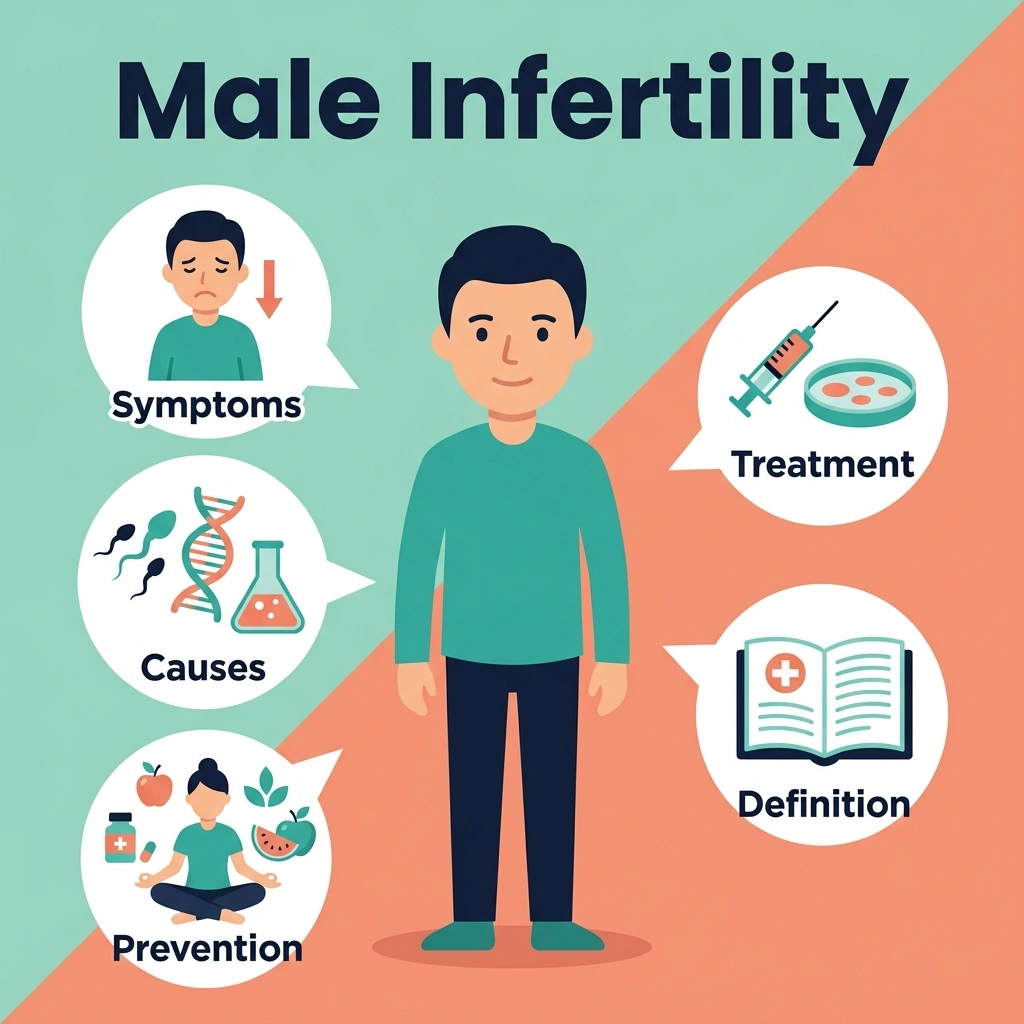
Male infertility refers to a man’s inability to cause pregnancy in a fertile female partner despite regular unprotected intercourse. Symptoms of male factor infertility include reduced sperm count, sexual dysfunction, and hormonal changes such as low testosterone or gynecomastia.
Common causes of male infertility range from varicocele and genetic conditions to hormonal disorders, infections, and lifestyle factors like smoking and obesity. Treatment options include lifestyle modifications, hormone therapy, surgical correction, and assisted reproductive technologies such as IVF and ICSI.
Choosing a qualified hospital or fertility center is essential for achieving the best outcomes. Fertility Network helps you find trusted, affordable male infertility treatment centers near you across India based on your location, clinical need, and budget.
What Is Male Infertility?
Male infertility, also known as male factor infertility, is a reproductive condition in which abnormalities in sperm production, function, or delivery prevent a man from fertilizing a female egg. According to the World Health Organization, approximately 15% of couples globally experience infertility, with male factor infertility accounting for nearly 50% of all cases. According to Dr Akhil Muthigi, an urologist and a male infertility specialist at Houston Methodist, “In previous years, it was thought that all infertility was due to female factors. However, in the last 10 to 15 years, we realized that up to 50% of infertility can be due to male factors. So it’s very important for both partners and a couple to be evaluated concurrently.”
Biologically, male fertility depends on normal spermatogenesis(the production of mature spermatozoa within the testicular tubules) and unobstructed sperm transport through the epididymis and vas deferens. Standard diagnostic settings rely on semen analysis interpreted against WHO criteria, assessing sperm concentration, total motility, and morphology. Conditions such as oligospermia (sperm count below 15 million/mL) and azoospermia (complete absence of sperm) are the most clinically significant findings. Testosterone levels and oxidative stress markers are evaluated alongside semen parameters to establish a complete picture.
The systematic clinical history of male factor infertility took shape in the early 20th century with the formalization of semen analysis as a reproductive diagnostic tool.
What Is the History of Male Infertility?
The history of male infertility dates back to ancient Egypt and Mesopotamia, where early texts first acknowledged the male role in reproductive failure. Scientific investigation accelerated in 1677 when Antonie van Leeuwenhoek observed spermatozoa under a microscope, and standardized semen analysis protocols emerged in the early 20th century.
The introduction of intracytoplasmic sperm injection (ICSI) in 1992 marked the most transformative clinical advance, while hormonal therapy protocols for hypogonadotropic conditions were refined during the same era. Although male factor was historically overlooked, it now accounts for 40–50% of all infertility cases according to the American Urological Association (AUA), driving equal diagnostic attention across all different types of infertility.
What Are the Types of Male Infertility?
The 3 main types of male infertility are listed below.
- Pre-testicular Infertility: Pre-testicular infertility refers to conditions originating outside the testes that disrupt the hormonal signals governing spermatogenesis. It occurs when the hypothalamic-pituitary axis fails to secrete adequate FSH and LH, impairing sperm production despite structurally normal testes. Symptoms typically mirror those of systemic hormonal deficiency rather than localized reproductive pathology.
- Testicular Infertility: Testicular infertility refers to impaired sperm production caused directly by structural or functional damage within the testes themselves. Conditions such as Klinefelter syndrome, prior orchitis, and testicular torsion damage Sertoli and Leydig cells, resulting in severely reduced or absent sperm output alongside measurable symptoms like testicular atrophy.
- Post-testicular Infertility: Post-testicular infertility refers to conditions that impair sperm transport or ejaculation after normal spermatogenesis. Vas deferens obstruction, ejaculatory duct blockage, or retrograde ejaculation prevents viable sperm from reaching the female reproductive tract, producing azoospermia symptoms despite intact testicular function.
What Are the Symptoms of Male Infertility?
The symptoms of male infertility include early warning signs, physical abnormalities, sexual dysfunction, and hormonal disturbances that can impair sperm production, sperm delivery, or reproductive function.
The symptoms of male infertility are listed below.
Early Symptoms: Early symptoms of male infertility are initial reproductive or physiological changes that may indicate impaired sperm production, sperm function, or fertilization capability. Early symptoms of male infertility include inability to conceive, reduced semen volume, testicular pain, swelling in the scrotal region, gynecomastia, and signs of increased oxidative stress affecting sperm health.
These symptoms occur because abnormalities in sperm generation, reproductive tract function, or cellular oxidative balance can reduce the ability of sperm to reach and fertilize an egg. In many men, the inability to conceive is the first noticeable sign because sperm abnormalities often develop without obvious physical symptoms.
Physical Symptoms: Physical symptoms of male infertility are structural or anatomical abnormalities affecting the testes, scrotum, or reproductive tract. Physical symptoms of male infertility include varicocele, testicular atrophy, cryptorchidism, hydrocele, and other structural abnormalities that interfere with normal reproductive function.
These symptoms develop because physical defects can disrupt testicular temperature regulation, blood circulation, hormone production, or sperm transport pathways. Such biological disruptions may damage sperm-producing tissues or prevent sperm from being effectively delivered during ejaculation.
Sexual Symptoms: Sexual symptoms of male infertility are reproductive or sexual function disturbances that reduce the likelihood of successful conception. Sexual symptoms of male infertility include erectile dysfunction, low libido, ejaculatory disorders, retrograde ejaculation, and premature ejaculation.
These symptoms occur because hormonal deficiencies, neurological disorders, vascular dysfunction, or abnormalities of the reproductive tract can impair erection quality, sexual desire, or the proper release of semen. As a result, sperm delivery during intercourse may become less effective.
Hormonal Symptoms: Hormonal symptoms of male infertility are manifestations of endocrine dysfunction that affect sperm production and male reproductive health. Hormonal symptoms of male infertility include testosterone deficiency, FSH elevation, LH imbalance, gynecomastia, reduced facial hair growth, and symptoms that are sometimes mistaken for erectile dysfunction.
These symptoms arise because reproductive hormones regulate sperm production, sexual development, and testicular function. Disruptions in testosterone, follicle-stimulating hormone (FSH), or luteinizing hormone (LH) can impair spermatogenesis and alter secondary male characteristics.
What Is the Difference Between Male Factor Infertility and Erectile Dysfunction?
The difference between male infertility and erectile dysfunction is that male infertility concerns abnormalities in sperm production, quality, or delivery, while erectile dysfunction involves the inability to achieve or maintain an erection sufficient for intercourse.
Physiologically, male infertility originates in spermatogenesis or reproductive tract function, whereas erectile dysfunction primarily involves disrupted vascular, neurological, or psychological mechanisms governing penile blood flow. Male infertility is sometimes misunderstood as sterility, which further compounds diagnostic delay.
What Is the Difference Between Male Factor Infertility and Sterility?
The difference between male infertility and sterility is that infertility describes a reduced or impaired ability to reproduce that may be treatable, while sterility refers to a permanent and absolute inability to conceive under any circumstances.
Scientifically, infertility indicates a reversible or manageable deficit in sperm parameters or reproductive tract function, whereas sterility denotes irreversible reproductive failure with no viable sperm available even through surgical retrieval. Knowing the causes of men’s infertility early is therefore clinically significant, as timely intervention frequently prevents a correctable condition from progressing into permanent, untreatable sterility.
What Are the Causes of Male Factor Infertility?
The causes of male infertility include varicocele, hormonal disorders, genetic conditions, infections, ejaculatory disorders, lifestyle factors, advanced age, and environmental toxin exposure.
The causes of male infertility are listed below.
- Varicocele: Varicocele refers to the abnormal dilation of testicular veins within the scrotum. According to epidemiological reviews published on PubMed Central (PMC), a varicocele is present in roughly 15% of the general male population but jumps to 35% to 40% among men undergoing evaluation for primary infertility. It impairs spermatogenesis by chronically elevating scrotal temperature, accelerating oxidative stress within the testicular microenvironment, and reducing testosterone biosynthesis through sustained venous congestion.
- Hormonal Disorders: Hormonal disorders refer to disruptions in the hypothalamic-pituitary-gonadal axis that reduce FSH and LH signaling, impairing testosterone production and spermatogenesis at the cellular level. Conditions such as hypogonadotropic hypogonadism are not uncommon and are identified through a combination of serum hormone panels and clinical evaluation.
- Genetic Conditions: Genetic conditions refer to inherited or spontaneous chromosomal abnormalities, including Y-chromosome microdeletions, Klinefelter syndrome (47, XXY), and CFTR gene mutations, that directly impair sperm production or structure. High levels of DNA fragmentation in sperm are a recognized consequence of underlying genetic pathology and are an underdiagnosed contributor to failed fertilization.
- Infections: Infections refer to bacterial, viral, or sexually transmitted pathogens that cause reproductive tract inflammation, including epididymo-orchitis, prostatitis, and orchitis secondary to mumps. They impair spermatogenesis through direct germinal epithelial damage, elevated oxidative stress, and the formation of obstructive scar tissue in sperm-conducting ducts.
- Ejaculatory Disorders: Ejaculatory disorders refer to functional abnormalities such as retrograde ejaculation, anejaculation, and obstructive ejaculatory duct pathology that prevent normal sperm delivery. Neurological damage from diabetes, prior pelvic surgery, and endocrine disruptors are established causes requiring specialized sperm retrieval approaches in clinical management.
- Lifestyle Factors: Lifestyle factors refer to modifiable behavioral contributors, including obesity, tobacco use, excessive alcohol intake, anabolic steroid abuse, and chronic psychological stress, that collectively impair spermatogenesis. These act by elevating scrotal temperature, disrupting endocrine signaling, and generating systemic oxidative stress that damages sperm DNA integrity over time.
- Age: Age refers to the progressive, clinically measurable decline in sperm quality, count, and DNA integrity associated with advancing paternal age, typically becoming significant after 40. Older men demonstrate reduced testosterone levels, elevated DNA fragmentation rates, and diminished semen volume, all of which reduce fertilization potential and increase the risk of genetic errors in offspring.
- Environmental Toxins: Environmental toxins refer to industrial chemicals, pesticides, heavy metals, and endocrine disruptors, including phthalates, bisphenol A, and lead, that interfere with testosterone synthesis and spermatogenesis at molecular and cellular levels. Occupational exposure to such compounds is not uncommon in India’s manufacturing and agricultural sectors and warrants specific evaluation during fertility workups.
Is Male Infertility Common?
Yes, male infertility is common because it contributes to nearly half of all infertility diagnoses globally. According to a 2017 meta-analysis published in Human Reproduction Update, sperm concentrations among men in Western regions declined by 52.4% between 1973 and 2011.
At What Sperm Count Does Male Infertility Occur?
Male infertility is typically diagnosed at sperm counts below 15 million per milliliter due to insufficient sperm density for reliable natural fertilization under WHO reference values. Oligospermia (less than 15 million/mL) and azoospermia (no measurable sperm) are the primary thresholds affecting clinical diagnosis.
Early clinical signs of impaired fertility appear before these thresholds, particularly when total motility falls below 40% or abnormal morphology exceeds 96% of cells, confirming that count alone does not fully determine reproductive outcome.
How Does Male Infertility Affect a Person?
The ways male infertility affects a person are listed below.
- Reproductive Impact: Male infertility prevents natural conception, creating a long-term dependence on medically assisted reproduction to achieve pregnancy.
- Psychological Effects: Infertility diagnosis produces lasting anxiety, depression, and diminished self-esteem, particularly in social contexts where male fertility carries significant cultural weight.
- Relationship Strain: Prolonged infertility generates lasting tension within partnerships, affecting physical intimacy, emotional communication, and shared future planning.
- Hormonal and Systemic Health: Underlying causes such as testosterone deficiency produce long-term systemic consequences, including reduced bone density, cardiovascular risk, and metabolic dysfunction.
- Financial Burden: Treatment cycles involving IVF, ICSI, or sperm retrieval procedures carry a lasting cumulative cost that extends over months to years of active medical management.
How Long Does Male Infertility Last?
Male infertility can last between 70 and 90 days, depending on the underlying cause and the timing of appropriate intervention. Reversible causes such as lifestyle-related infertility or post-infectious impairment may improve within 2 to 3 spermatogenesis cycles.
Severe cases involving genetic abnormalities, irreversible testicular failure, or permanent obstruction may require lifelong medical intervention or assisted reproduction. Early diagnosis is important because timely identification of the cause maximizes the probability of reversibility and prevents treatable conditions from progressing into permanent infertility.
How Is Male Infertility Diagnosed?
The main ways to diagnose male infertility are listed below.
- Semen Analysis: Semen analysis measures sperm count, motility, and morphology against WHO reference criteria to identify abnormal reproductive parameters.
- Hormone Panel: A serum blood test measuring testosterone, FSH, and LH identifies disruptions in hypothalamic-pituitary-gonadal axis signaling relevant to prevention of misdiagnosis.
- Scrotal Ultrasound: Imaging evaluates structural causes including varicocele, testicular atrophy, and ductal obstruction affecting sperm transport.
- Genetic Testing: Y-chromosome microdeletion analysis and karyotyping identify inherited causes of azoospermia or severe oligospermia requiring specialized management.
- Testicular Biopsy: Tissue sampling confirms sperm production status when azoospermia requires differentiation between obstructive and non-obstructive causes.
- Post-ejaculatory Urinalysis: Urine examination after orgasm identifies sperm in the bladder, confirming retrograde ejaculation as the underlying diagnosis.
How to Prevent Male Infertility?
Preventing male factor infertility includes maintaining a healthy body weight, reducing oxidative stress through diet and supplementation, avoiding environmental toxins, managing scrotal temperature, and seeking early medical evaluation.
To prevent male infertility, follow the tips listed below.
- Maintain an Antioxidant-rich Diet: A diet high in zinc, folate, vitamin C, and selenium directly reduces oxidative stress and supports healthy sperm production at the cellular level.
- Exercise Regularly: Moderate-intensity exercise improves testosterone levels and metabolic health, reducing obesity-driven hormonal disruption that impairs spermatogenesis.
- Avoid Environmental Toxins: Minimizing occupational and household exposure to pesticides, heavy metals, and endocrine disruptors protects against chemical interference with testosterone synthesis and sperm development.
- Limit Alcohol Consumption: Reducing alcohol intake prevents gonadotropin suppression and testosterone decline, preserving sperm quality and ejaculate volume.
- Quit Smoking: Smoking cessation reduces DNA fragmentation in sperm and lowers systemic oxidative stress throughout the reproductive system.
- Manage Scrotal Temperature: Avoiding tight underwear, prolonged heat exposure, and laptop use on the lap maintains the lower scrotal temperature necessary for normal spermatogenesis.
- Use Supplements: Antioxidant supplements including coenzyme Q10, vitamin E, and selenium may support sperm health when prescribed by a fertility specialist based on individual clinical assessment.
- Seek Medical Help Early: Early consultation with a urologist or andrologist for any reproductive symptoms prevents reversible conditions from becoming permanent problems; medical help is important as the most direct prevention strategy available.
When to Seek Medical Help for Male Infertility?
Seek medical help for male infertility when a couple has been attempting conception without success for 12 months, or after 6 months if the female partner is older than 35. A urologist, andrologist, or fertility specialist should be contacted immediately when symptoms such as testicular pain, scrotal swelling, hormonal imbalance, reduced facial hair, or a history of groin surgery or undescended testes are present. Delaying evaluation increases the risk that a treatable condition becomes a permanent problem, narrowing future reproductive options.
Can Male Infertility Be Permanent?
Yes, male infertility can be permanent when the underlying cause involves irreversible genetic abnormalities, complete testicular failure, or severe structural obstruction unresponsive to intervention. Conditions such as Klinefelter syndrome (47, XXY), bilateral congenital absence of the vas deferens, or end-stage testicular atrophy result in permanent azoospermia in most cases. Early treatment is critical because many causes that become permanent, including varicocele-induced testicular damage and hormonal dysfunction, are fully reversible when identified before irreversible cellular loss occurs.
What Are the Treatments of Male Infertility?
The treatment options for male infertility involve a structured, evidence-based progression from least to most invasive, guided by the diagnosed cause and its severity. The treatments of male infertility are listed below.
- Lifestyle Modifications: Lifestyle modifications refer to structured changes in diet, physical activity, substance use, and sleep that improve sperm parameters and restore hormonal balance. They include weight loss, smoking cessation, alcohol reduction, scrotal temperature management, and antioxidant therapy under doctor supervision, forming the first-line evidence-based intervention for mild to moderate male infertility with a modifiable cause.
- Natural Remedies: Natural remedies refer to evidence-supported nutritional and botanical interventions, including ashwagandha, fenugreek, coenzyme Q10, zinc, and selenium supplementation — that reduce oxidative stress and support testosterone levels. They are most effective when administered alongside conventional treatment under a fertility specialist’s guidance, rather than used as standalone replacements for medical care.
- Hormone Therapy: Hormone therapy refers to pharmacological restoration of the hypothalamic-pituitary-gonadal axis in men whose infertility stems from endocrine dysfunction. It includes clomiphene citrate to stimulate endogenous FSH and LH, hCG injections to drive testicular testosterone production, exogenous FSH for direct spermatogenesis stimulation, and aromatase inhibitors to correct estrogen excess — each protocol selected based on the specific hormonal deficiency identified through hormone replacement evaluation.
- Surgical Treatment: Surgical treatment refers to operative procedures that correct anatomical causes of male infertility with the goal of restoring natural sperm transport or improving testicular function. Varicocelectomy repairs pathological venous dilation and reliably improves sperm parameters in eligible men; microsurgical vas deferens reconstruction restores patency in obstructive azoospermia; and testicular sperm extraction (TESE) enables sperm retrieval directly from testicular tissue in men with non-obstructive azoospermia pursuing ART.
- Assisted Reproductive Technology: Assisted reproductive technology (ART) refers to medical procedures that facilitate fertilization when natural conception is not achievable, including intrauterine insemination (IUI), in vitro fertilization (IVF), and intracytoplasmic sperm injection (ICSI). ICSI, the direct microinjection of a single sperm into a mature egg, is the most effective ART approach for severe male factor infertility and is routinely combined with surgical sperm retrieval to achieve fertilization even in men with azoospermia.
- Medications: Medications refer to pharmacological agents used to treat the specific underlying cause of male infertility, including antibiotics for active reproductive tract infections, hormone replacement compounds for hypogonadal states, and alpha-adrenergic agents for retrograde ejaculation. All medication protocols require initial evaluation and ongoing monitoring by a fertility specialist to ensure appropriate dosing, efficacy, and avoidance of adverse effects on sperm production.
Is Seeing a Doctor Necessary Before Taking Male Infertility Medications?
Yes, seeing a doctor is necessary before taking male infertility medications because self-medicating without an accurate diagnosis can worsen hormonal balance, mask serious underlying pathology, or cause irreversible suppression of sperm production.
Medical supervision is required because commonly used agents, including clomiphene citrate, hCG, and FSH, act directly on the endocrine system and must be dosed based on individual hormone profiles and semen parameters. Before prescribing, the doctor evaluates serum testosterone, FSH, and LH levels alongside semen analysis and genetic screening results, then monitors response through serial follow-up panels to confirm treatment efficacy and detect adverse effects early.
What Are the Best Places in India for Male Infertility Treatment?
The best places in India for male infertility treatment include major metropolitan cities and specialized fertility centers recognized for advanced andrology infrastructure, experienced reproductive specialists, and comprehensive ART capabilities.
The best places in India for male infertility treatment are listed below.
- Mumbai, Maharashtra: Mumbai hosts some of India’s most advanced reproductive medicine centers, with dedicated andrology laboratories equipped for ICSI, TESE, genetic diagnostics, and sperm cryopreservation, staffed by internationally trained fertility specialists and urologists.
- Delhi and NCR, Delhi: The Delhi-NCR region offers the country’s highest concentration of NABH-accredited fertility hospitals, featuring internationally trained andrologists, full ART programs, and government-subsidized treatment pathways for patients who qualify.
- Chennai, Tamil Nadu: Chennai is recognized for high standards in reproductive healthcare, with leading fertility centers offering genetic counseling, advanced male factor evaluation, sperm banking, and surgical andrology services across the state.
- Bengaluru, Karnataka: Bengaluru combines modern medical infrastructure with a high volume of fertility specialists experienced in treating complex male infertility cases, providing both diagnostic excellence and complete ART services across multiple accredited hospitals in the city.
- Hyderabad, Telangana: Hyderabad’s NABH-certified fertility clinics offer affordable, quality-assured male infertility treatment including varicocelectomy, microsurgical sperm retrieval, and full IVF/ICSI programs under experienced andrologist supervision.
- Kolkata, West Bengal: Kolkata provides comprehensive male infertility care through established reproductive medicine departments and specialty fertility clinics offering hormonal evaluation, surgical correction, sperm banking, and ART support services across the city.
How Much Does Male Infertility Treatment Cost in India?
In India, male infertility treatment costs between ₹5,000 for basic diagnostics and up to ₹4,00,000+ for advanced treatment, depending on the intervention type, city, and hospital tier. Semen analysis and hormone panels range from ₹500 to ₹5,000, surgical procedures like varicocelectomy from ₹25,000 to ₹80,000, and full IVF or ICSI cycles from ₹80,000 to over ₹4,00,000.
Cost differences are driven by hospital infrastructure, city-tier pricing, specialist experience, and whether sperm retrieval is required alongside ART. Government hospitals and accredited clinics in Tier 2 cities offer significantly more affordable care without compromising diagnostic quality. Fertility Network helps individuals and couples find trusted, affordable male infertility treatment centers across India. We match patients with verified specialists based on location, clinical need, and budget.
How Is Male Infertility Different from Other Types of Infertility?
Male infertility is different from other types of infertility in a way that male fertility originates exclusively from sperm-related issues, specifically sperm production, function, or delivery, rather than from ovulation failure, uterine pathology, or tubal obstruction. Its unique characteristics include its often invisible nature, where the absence of obvious symptoms of male infertility means many men go undiagnosed for years, and its reliance on continuous sperm production rather than cyclical reproductive function.
Unlike most other infertility conditions, early prevention through lifestyle modification is particularly effective for common causes of male infertility such as varicocele and obesity-related impairment. Proper treatment requires andrologists and reproductive urologists rather than general gynecologists, making finding the right place for treatment a clinically distinct challenge with different costs compared to female fertility procedures.

Fathima Zahra is a reproductive health content specialist at FertilityNetwork.in — India’s largest independent fertility clinic directory and patient education platform.
Fathima’s work covers the full spectrum of reproductive medicine, from foundational biology to advanced fertility treatment. Her published articles span reproductive anatomy (ovaries, uterus, fallopian tubes, testes), core reproductive processes (ovulation, fertilization, implantation, the menstrual cycle), reproductive hormones (estrogen, progesterone, testosterone, FSH, LH, AMH, and prolactin), and the clinical conditions that cause infertility in both men and women.
On the male side, her research covers conditions including azoospermia, oligospermia, asthenozoospermia, teratozoospermia, varicocele, erectile dysfunction, Klinefelter syndrome, and Y chromosome microdeletion. On the female side, she writes about PCOS, endometriosis, uterine fibroids, anovulation, diminished ovarian reserve, premature ovarian insufficiency, tubal blockage, pelvic inflammatory disease, and Turner syndrome.
Her treatment coverage includes intrauterine insemination (IUI), in vitro fertilization (IVF), intracytoplasmic sperm injection (ICSI), egg retrieval, embryo transfer, egg freezing, sperm freezing, and oncofertility — providing patients with detailed, process-level understanding of each procedure, its clinical indications, success rates, and costs.
Every article Fathima publishes follows a structured, evidence-based research methodology:
1. Source verification against ICMR (Indian Council of Medical Research) national fertility and ART guidelines
2. Cross-referencing with ESHRE (European Society of Human Reproduction and Embryology) clinical protocols
3. Alignment with ASRM (American Society for Reproductive Medicine) evidence-based practice guidelines
4. Citation of PubMed-indexed, peer-reviewed studies published within the last 5 years
5. Verification of all diagnostic thresholds, hormonal reference ranges, and clinical statistics against current international standards
All content authored by Fathima undergoes editorial review by the FertilityNetwork Medical Research Board before publication, ensuring clinical accuracy and factual integrity across every article published on the platform.
Fathima’s content is editorially independent. FertilityNetwork.in does not publish sponsored medical opinions, and no article is written to promote specific clinics, doctors, or fertility treatments.
Leave a Reply